
Quick Answer
AI search engine optimization is the practice of structuring your content so AI tools can find, understand, and cite it. It covers Google AI Overviews, the AI summaries above search results, plus chatbots like ChatGPT. You earn visibility with clear, trustworthy content. Your SEO basics still apply. The goal shifts from ranking links to becoming a source that AI quotes.
Key Takeaways
- AI search engine optimization helps your content appear inside AI answers, not just classic results.
- It builds on traditional SEO rather than replacing it.
- Clear structure, short sections, and direct answers make content easy to extract.
- Trust signals like expertise and credible sources strongly influence citations.
- AI answers often reduce clicks, so you must track visibility in new ways.
- Fundamentals beat shortcuts since hacks tend to fade fast.
- Optimize for two surfaces at once: classic search and AI citation.
- No single trick controls AI recommendations, so build broad credibility.
Table of Contents
Search is changing faster than most marketers can keep up with. AI tools now answer questions before users ever click. That shift threatens the traffic your content used to earn. You feel the pressure, but the path forward stays unclear.
Today, 34% of U.S. adults have used ChatGPT, and that share continues to climb (Pew Research Center). Counting all AI tools, even more people use them regularly (Brookings). By early 2026, AI Overviews appeared on roughly 48% of tracked Google searches (BrightEdge). That share has grown fast since 2024. Your audience increasingly gets answers from machines.
This guide explains AI search engine optimization in plain terms. You will learn how AI search works and how to structure content for it. You will also get checklists, examples, and a simple framework. By the end, you can adjust your strategy with confidence.
What Is AI Search Engine Optimization?

AI search engine optimization means preparing content so AI systems can find, read, and cite your pages. Some people call it AI SEO, generative search optimization, or answer engine optimization. We will use the main term throughout this guide.
AI search engine optimization is a type of search engine optimization, or SEO. SEO is the process of helping your pages show up in search results. It relies on search engine bots crawling the internet and indexing new and updated pages. AI search builds on that same base. The difference is how machines read and reuse your words.
It focuses on three clear goals:
- Visibility inside AI answers, such as Google AI Overviews.
- Citations that name your site as a trusted source.
- Clear content that machines can extract and summarize.
If an AI tool can quote your page accurately, then you have a strong chance of being cited.
How Do AI Search Engines Work?
AI search engines work by retrieving relevant content and writing a summary from many sources. They do not simply list ten blue links. Instead, they read, rank, and rewrite information into a direct answer. Google’s version grew out of its Search Generative Experience, once tested as SGE.
An AI search engine requires indexed, crawlable pages before it can cite them (Google). That crawl-and-index step is the starting point for how AI search engines work.
Here is the basic process:
- The system reads your query and breaks it into subtopics.
- It searches the web across those subtopics, which Google calls query fan-out.
- It selects passages from trusted, relevant pages.
- It writes an answer and cites supporting links.
Most AI summaries pull from several sources at once. In one study, 88% of Google AI summaries cited three or more sources (Pew Research Center).
AI SEO vs Traditional SEO, AEO, and GEO

These terms overlap, which confuses many marketers. Each describes a slightly different focus within one shared goal: visibility.
Answer engine optimization, or AEO, aims at direct answer boxes and voice assistant replies. Generative engine optimization, or GEO, focuses on AI-generated summaries. AI search engine optimization is the umbrella over both.
The table below shows how each approach fits.
| Approach | Main Focus | Best For |
|---|---|---|
| Traditional SEO | Ranking pages in classic results | Steady organic traffic |
| AEO | Winning direct answers | Question-based queries |
| GEO | Earning citations in AI summaries | ChatGPT and AI Overviews |
| AI SEO | All of the above, combined | A complete strategy |
If your audience asks direct questions, then prioritize answer engine optimization tactics first.
Optimize for Two Surfaces, Not One
AI search creates two places to be found. The first is classic organic search. The second is AI citation inside tools like ChatGPT. These two surfaces do not always move together.
A page can rank well on Google yet never appear in AI answers. Another can earn AI citations with weaker rankings. Strong entity signals and category authority often explain the gap. Entity signals show how clearly machines recognize your brand. Category authority means being recognized as a leader in your category.
AI citation requires the same indexed pages that classic search uses (Google). The tactics then diverge by surface. Answer engine optimization and classic SEO still share one foundation (Forrester).
Plan for both surfaces at once:
- Classic search: keywords, rankings, and click-through rate (the share of searchers who click).
- AI citation: strong structure, a clear brand identity, and credible sources.
Treat both as part of one digital strategy. If a page ranks well but earns no AI citations, then strengthen its structure and trust signals.
How to Optimize Your Content for AI Search
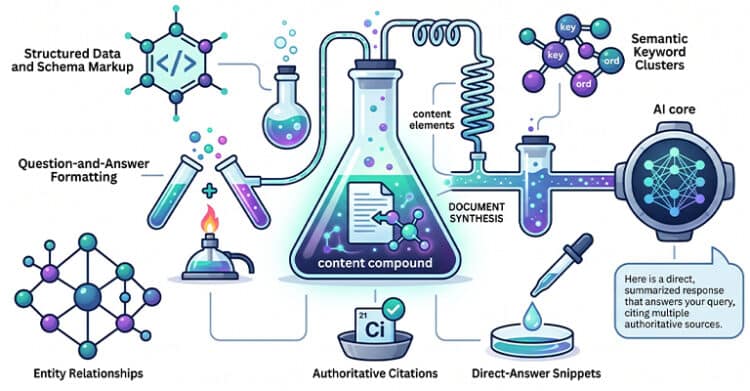
Optimizing for AI search starts with clarity, not tricks. Google warns against chasing AEO or GEO hacks (Google Search Central). Solid fundamentals still win.
Good content optimization requires a structure that machines can read. Follow these steps in order.
- Answer the main question in the first two sentences.
- Break content into short, focused sections with clear headings.
- Use definitions, steps, and lists that are easy to extract.
- Add a concise FAQ that matches real user questions.
- Support claims with credible sources and clear data.
Each step makes your page easier to read and easier to quote. They also help you optimize content for AI Overviews, Google’s most visible AI feature. These habits strengthen your AI search optimization across your whole site.
Research Prompts, Not Just Keywords
Keywords still matter, but prompts now matter too. People ask AI tools full questions, not short phrases. Prompt research is the practice of mapping those real questions.
This approach reveals the deeper intent behind a search. It also uncovers the follow-up questions you can answer on one page.
Use a simple process:
- Identify real user questions from forums, Reddit, and People Also Ask.
- Enter target prompts into AI tools, then study which sources get cited.
- Map the follow-up questions around each main prompt.
Pair this work with solid audience research. Once you know the exact prompts buyers use, you can structure pages to answer them.
Structure Content So AI Can Extract It
AI tools favor content they can lift cleanly. Dense, rambling text is hard to summarize. Tight structure helps machines and readers alike.
Extractable content is formatted so each part answers one clear question. Use these habits on every page.
- Lead each section with a direct answer, then add detail.
- Keep paragraphs to two or three short sentences.
- Write headings that phrase a real question.
- Add tables for comparisons and lists for steps.
Match each section to a specific search intent for best results. Search intent is the goal behind a search. When a section answers one clear question, give it a question heading.
Different AI Tools Cite Different Sources
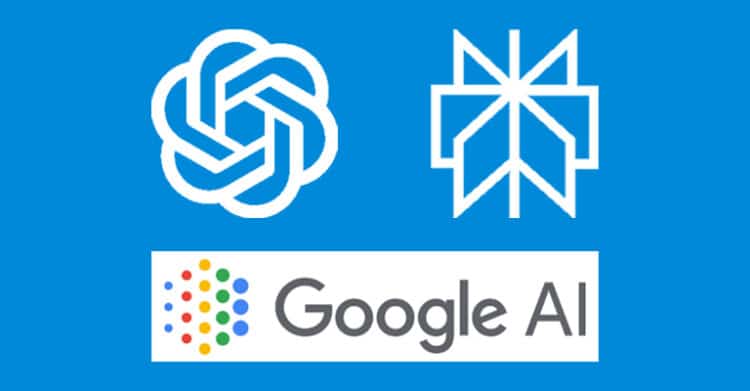
Each AI tool picks sources in its own way. One strategy will not fit every platform. Match your effort to where your audience actually asks questions.
AI citation patterns vary by platform, so spread your proof across several source types. The table below shows a simple starting point.
| Platform | Tends to Favor | What to Prioritize |
|---|---|---|
| ChatGPT | Established, authoritative references | Clear credentials and credible sources |
| Perplexity | Community discussion and peer input | Authentic forum and community presence |
| Google AI Overviews | A mix of source types | Strong SEO plus helpful, clear content |
If your buyers rely on community advice, then build an honest presence in those spaces.
Build the Technical Foundation for AI Search
A well-built site lets AI systems crawl and trust your pages. Without it, even great content stays invisible.
To appear in AI answers, your pages must be indexed and able to show a snippet (Google). A snippet is the short preview of your page in the results. Review your technical SEO, the behind-the-scenes setup of your site, before you scale content.
Structured data is extra code that labels your content for machines. Schema is the shared vocabulary it uses (Schema.org). It plays a growing role in AI search results.
- Make sure every key page is indexed and crawlable.
- Add structured data, such as FAQ and Article schema.
- Improve site speed and mobile usability.
- Connect related topics with smart internal links.
Smart internal linking, which means linking between your own pages, also helps AI map your site.
Build Authority and Trust With E-E-A-T
AI systems favor sources they consider trustworthy. Google rewards content that shows experience, expertise, authoritativeness, and trustworthiness (Google Search Central). That standard is called E-E-A-T.
Trust signals require real expertise, not keyword tricks. Build them with steady, honest work.
- Publish first-hand experience and original examples.
- Show clear author credentials and sourcing.
- Earn mentions and links from respected sites.
- Keep content accurate and updated over time.
Adding citations, quotes, and data can lift your visibility in AI answers. One academic study found gains of up to 40% from these signals (Princeton).
A consistent content marketing strategy builds authority over months, not days.
Authority signals work best when they fit your category. Reviews, mentions, and community trust carry real weight. What matters most can vary by industry, so cover several signal types. Many AI answers end without a click. In this zero-click world, visibility builds your brand, not just traffic.
Measure Your AI Search Performance

Measurement is harder in AI search than in classic SEO. Many AI answers never lead to a click (Pew Research Center). You need new ways to track visibility.
When an AI summary appears, users click a result only 8% of the time. Without one, they click 15% of the time (Pew Research Center). Watch these signals instead.
- Branded search volume and direct traffic trends.
- Mentions or citations of your brand inside AI tools.
- Impressions and clicks in Google Search Console.
- Assisted conversions from organic and referral sources.
- Share of voice and sentiment inside AI answers.
Here is what those terms mean. Branded search means people searching for your brand name. Search Console is Google’s free traffic and ranking tool. Assisted conversions are sales that an earlier visit helped. Share of voice is how often you appear versus rivals.
A buyer persona is a profile of a typical customer. Track visibility by buyer persona, not by a single overall score. The same query can return different brands for different buyers. Build a short prompt library, a set of test questions, for each buyer type. Then run it monthly.
Pair these metrics with broader efforts to grow your search traffic.
Common Mistakes to Avoid
Chasing Hacks Instead of Quality
Many marketers hunt for shortcuts that do not exist. Google says fundamentals matter more than AI tricks (Google Search Central). Much of what drives AI recommendations sits inside the model. You cannot control that with one trick. Build broad credibility instead.
Writing for Machines, Not People
Stuffing keywords or padding word counts backfires. AI tools and readers both reward clarity. Write for a real person with a real question.
Ignoring Structure
Walls of text are hard to extract. Short sections and clear headings win citations. Format every page for fast scanning.
Skipping Sources and Proof
Unsupported claims weaken trust. Cite credible data and link to strong sources. Proof helps both readers and AI systems.
People Also Ask
Is AI SEO different from regular SEO?
Not entirely. AI search engine optimization builds on traditional SEO. It adds a focus on extractable, citable content.
Can I rank in AI Overviews without ranking on page one?
Sometimes. Google may cite diverse sources beyond the top result (Google). Relevant, helpful content still gives the best odds.
Does AI search replace Google?
No, not yet. Google remains a major search engine with built-in AI features. Many users now blend search engines and chatbots.
How long does AI SEO take to work?
It varies by site and topic. Authority and trust are built over months. Consistent, helpful content speeds up the process.
Do I need schema markup for AI search?
Well-structured schema markup helps, but is not strictly required. Schema clarifies your content for machines. It supports both classic and AI features.
Your AI Search Checklist
Use this checklist before you publish your next post.
| Task | |
|---|---|
| ☐ | Answer the main question in the first two sentences. |
| ☐ | Break content into short sections with question headings. |
| ☐ | Add a focused FAQ with concise answers. |
| ☐ | Include at least one table or list per major topic. |
| ☐ | Confirm every key page is indexed and crawlable. |
| ☐ | Add FAQ and Article structured data. |
| ☐ | Support claims with credible, linked sources. |
| ☐ | Weave internal links to related guides. |
Where AI Search Goes From Here

AI search rewards the same things good marketing always has. Clear answers, real expertise, and helpful structure win. The format changed, but the principles held. In a zero-click world, AI visibility is brand building, not just traffic.
The tools will keep shifting, and that pace can feel daunting. New engines will rise, and old tactics will fade. Yet the core goal stays simple. Be the most helpful, trustworthy answer to a real question.
Before you plan your next move, it helps to step back and reflect. A few honest questions can sharpen your focus:
- If a person never clicks your link, is being the trusted source still worth it?
- Which questions does your audience ask that no one answers clearly yet?
- Are you building lasting authority, or just chasing the next shortcut?
Sit with those questions before you write another word. Your answers will shape a smarter, steadier plan. The brands that win will not be the loudest ones. They will be the ones people and machines learn to trust. Treat AI search engine optimization as one piece of a complete plan, not a separate game. Start small. Pick one post and apply this checklist today. Then build an SEO strategy that treats AI search as part of the bigger plan.
Frequently Asked Questions
What is AI search engine optimization?
AI search engine optimization is the practice of structuring content so AI tools can find, understand, and cite it. It covers Google AI Overviews, chatbots, and other answer engines. The goal is to become a source for AI quotes, not just a blue link. You earn this with clear answers, strong structure, and trustworthy sources. It builds on classic SEO rather than replacing it. In short, you make pages easy to read and reuse.
How is AI SEO different from AEO and GEO?
AI SEO is the broad umbrella term for all of this work. Answer engine optimization, or AEO, targets direct answers and voice assistant replies. Generative engine optimization, or GEO, targets AI-generated summaries and citations. All three rely on the same base of clear, helpful, trustworthy content. The labels differ, but the goal is shared across them. Each one simply focuses on a different part of how people search.
Will AI search reduce my website traffic?
It can because many AI answers never lead to a click. Users often read the summary and then stop there. You can soften this with steady branding and frequent citations. The clicks that do arrive tend to be higher quality. So track your visibility and brand recall, not just raw clicks. In this new world, being the cited source still carries real, lasting value for your brand.
How do I get cited in AI Overviews?
Start by publishing pages that are indexed and eligible to show in search. Answer the main question clearly and early on the page. Add structured data, credible sources, and original detail readers cannot find elsewhere. Strong relevance and trust signals raise your odds of a citation. There is no guaranteed trick, since much of the choice lies within the model. Focus on being genuinely useful and easy for tools to extract.
Does keyword research still matter for AI search?
Yes, keyword research still matters a great deal today. Keywords reveal the questions and topics your audience cares about most. You can then build sections that answer those questions directly. Pair this with prompt research, which maps the full questions people ask AI tools. Together, they show both the terms and the intent behind a search. Use both to plan content that machines and human readers genuinely value.
Is structured data necessary for AI search?
Structured data is helpful, but it is not strictly required. Schema markup labels your content so machines understand it clearly. This reduces guesswork and helps AI extract the right answer faster. It also supports classic search features. Start with FAQ and Article schema on your most important pages. Think of it as a translation layer between your content and the machines reading it.
How do I measure AI search visibility?
Watch branded search volume, direct traffic, and Search Console data. Test your target prompts in AI tools to see if you appear. Track which sources get cited and how your brand is described. Measure by buyer persona, not by a single overall score, since results vary by person. Run a small prompt library each month and log the changes over time. Then pair these signals with your normal organic performance metrics.
Can small sites compete in AI search?
Yes, small sites can absolutely compete in AI search today. AI tools often cite diverse sources, not only the biggest brands. Focused, expert content gives a small site a real chance to appear. Topical authority means trusted, thorough coverage of one subject. It matters more than sheer size. Clear structure and honest experience also help your odds. Pick a narrow area, cover it well, and build trust over time.
Should I use AI to write my content?
You can use AI to assist, but a person should edit for accuracy and value. Google judges the quality of content, not how it was made. Mass, low-value output produced without oversight can trigger ranking penalties. Use AI as a drafting and research helper, then add real expertise. Check every fact and source carefully before you publish anything. The goal is helpful, people-first content, no matter how you produce it.
How often should I update content for AI search?
Review your key pages every few months on a steady schedule. Refresh stale facts, broken links, sources, and examples as needed. AI tools tend to favor recent, accurate information when picking sources. A clear update date can also signal freshness to your readers. Prioritize your highest-traffic and pillar pages before the rest. Treat content as something you maintain, not something you publish once and forget.
Glossary
| Term | Definition |
| AI search engine optimization | Structuring content so AI tools can find, understand, and cite it. |
| AI Overview | A Google feature that shows an AI summary above search results. |
| Answer engine optimization (AEO) | Optimizing content to win direct answers and voice assistant replies. |
| Generative engine optimization (GEO) | Optimizing content to earn citations in AI-generated summaries. |
| E-E-A-T | Experience, expertise, authoritativeness, and trustworthiness, used to judge quality. |
| Query fan-out | When an AI system searches many subtopics for one query. |
| Schema markup | Code that labels your content so machines understand it. |
| Structured data | Organized information added to a page using a shared vocabulary. |
| Extractable content | Content formatted so machines can lift a clear answer. |
| Indexing | The process of storing a page so it can appear in results. |
| Search intent | The goal behind a user’s search. |
| Zero-click search | A search that ends without the user clicking a link. |