

Quick Answer
Generative search optimization (GEO) is the practice of structuring your content so AI search engines cite, quote, or recommend it inside their answers. AI search engines include ChatGPT, Perplexity, Google AI Overviews, Gemini, and Claude. Unlike traditional SEO, which earns clicks on a results page, generative search optimization earns mentions inside AI-generated responses. It combines clear writing, structured formatting, original data, and authoritative sources.
Key Takeaways
- Generative search optimization (GEO) earns citations inside AI answers, not clicks on a results page.
- The term comes from a 2024 Princeton-led research paper, presented at ACM SIGKDD in 2024.
- Adding statistics, source citations, and direct quotations lifted visibility in AI responses by up to 40 percent in the study.
- AI engines use retrieval-augmented generation, so traditional SEO foundations still drive most of the work.
- Lower-ranked pages often gain the most from GEO tactics, which gives small brands a real opening.
- Quarterly content refreshes keep pages competitive because AI engines weigh recency.
- Track AI visibility across multiple platforms with tools like Ahrefs Brand Radar and Semrush Enterprise AIO.
Table of Contents
Your pages rank well on Google. But ask ChatGPT or Google AI Overviews the same questions, and your site never gets mentioned. That gap is the new visibility problem. Generative search optimization closes it.
Search is shifting from a list of blue links to direct, AI-written answers. Users now get a complete reply without having to click through to another page. Brands that earn citations inside those answers stay visible. The rest fade quietly.
The scale is already large. AI Overviews now appear in 25 percent of Google searches (Conductor). The figure comes from an analysis of 21.9 million queries. Most of those queries come from people looking for information. That is exactly what most content sites cover.
In this guide, you will learn what generative search optimization is and how AI engines pick sources. You will see how it differs from traditional SEO and where the two overlap. You will get a step-by-step process for creating content that earns AI citations. The work fits inside a broader digital marketing strategy, not in place of it.
What Is Generative Search Optimization?
Generative search optimization, often shortened to GEO, is the practice of shaping your content for AI search tools. The goal is for those tools to cite, quote, or recommend it. These tools include ChatGPT, Perplexity, Google AI Overviews, Gemini, and Claude. They generate written answers instead of returning a list of links.
The goal is no longer just to rank. It is to be the source that AI engines pull from when answering a user query. This involves earning a mention, a citation, or a paraphrase inside the AI-generated response.
AI engines treat clear, well-sourced, structured content as reliable input. Vague pages buried in clutter get skipped for cleaner alternatives.
Princeton researchers introduced the term in late 2023 (Princeton). The paper used the phrase Generative Engine Optimization. In practice, marketers also refer to it as AI search optimization, AI SEO, or large language model optimization (LLMO). A large language model is an AI trained on huge amounts of text.
How Generative Engines Find and Cite Content

To optimize for an AI search engine, you need to know how it builds an answer. Most engines use a method called retrieval-augmented generation, or RAG. The engine pulls relevant pages from a search index. A search index is the database where a search engine stores the pages it has found and saved. Then the engine writes an answer using those pages as context. User search intent is the first signal the engine reads.
The process usually follows five steps:
- The AI reads the user’s question and decides what kind of information is needed.
- It searches an index of pages, like Google’s or its own.
- It ranks those pages and pulls passages it can quote, paraphrase, or summarize.
- It drafts an answer using the retrieved passages as evidence.
- It often cites or links to source pages so users can check the information.
Two systems decide whether you appear in an answer. The traditional ranking system filters which pages are eligible. The generative system picks which of those it actually cites.
A page that is not in the search index cannot be retrieved. Even retrieved pages get skipped if they are poorly written.
Google AI Overviews and AI Mode add another step called query fan-out (Google Search Central). The system breaks your question into several related sub-queries. It retrieves pages for each one, then weaves the answers together. A single page can be cited even when it does not match the original query verbatim.
GEO vs SEO vs AEO: How They Connect
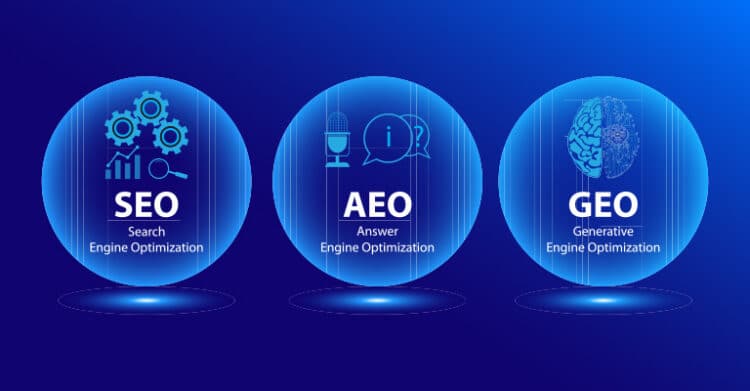
Traditional search engine optimization earns clicks from the results page. Answer engine optimization (AEO) prepares content for direct-answer features. Examples include featured snippets, the boxed answers Google shows above the results. Generative search optimization earns citations inside AI-written answers.
The three disciplines share a foundation. All require clear structure, useful content, and crawlable pages that search engines can read and add to their indexes. Where they differ is the outcome each one targets.
Where GEO Builds on Traditional SEO
Strong SEO is still the launchpad. Google AI Overviews and AI Mode pull from the same index as classic search. If your page cannot be crawled or indexed, no AI feature can use it. A solid SEO strategy drives most of the early gains.
Where GEO Goes Further Than AEO
AEO focuses on snippet-style answers and direct queries. Generative search optimization adds requirements for citation-friendliness, statistics, and authoritative sources. Most voice and answer queries now route through generative systems, so AEO is largely a subset of GEO.
Already publish AEO-friendly content? Then your generative search optimization learning curve is short. Sites that are new or thin on SEO usually need three to six months. The build-up creates authority that earns AI citations.
The Research Behind Generative Search Optimization
Generative search optimization is grounded in peer-reviewed work, not marketing claims. In 2024, a research team led by Pranjal Aggarwal at Princeton published a paper titled GEO: Generative Engine Optimization. The team included researchers from Georgia Tech, the Allen Institute for AI, and IIT Delhi. The paper was later presented at ACM SIGKDD, a leading data science conference (Research with Princeton University).
The team built a test set of 10,000 queries across nine topic areas. They ran experiments on a fixed set of pages to see which tactics worked best. Three tactics produced the strongest gains:
- Adding original statistics to the page
- Citing authoritative sources for key claims
- Including direct quotations from named experts
The combined effect lifted visibility in AI responses by up to 40 percent. Adding statistics alone produced the biggest single boost.
The study also found that lower-ranked pages gained the most. A page sitting at position five could see its visibility more than double after applying these tactics. A page already at position one had little room to improve (Wikipedia).
How to Create GEO-Friendly Content

Use these steps to make a page citation-ready. The process layers generative search optimization tactics on top of solid SEO work. Think of it as content optimization tuned for AI search.
- Lead with a direct, 40 to 80 word answer to the page’s main question.
- Use clear H2 and H3 headings so engines can extract sections cleanly.
- Keep paragraphs short, with three to four sentences at most.
- Add original statistics, numbers, and dates that competitors do not have.
- Cite sources by name, with a hyperlink to the specific source page.
- Include direct quotations from named experts when the topic calls for it.
- Add a clear FAQ block with one to three sentence answers.
- Define jargon inline the first time it appears.
- Apply structured data, such as FAQPage or Article schema, where it fits. This is code that tells search engines what each piece of content is.
- Update the page on a quarterly cycle so its data stays fresh.
If you already optimize content well, layering these steps is straightforward. Starting from scratch? Build the SEO foundation first, then add the GEO layer on top.
What Kinds of Pages Get Cited Most
Some page types earn AI citations more often than others (Semrush). The strongest options for most sites include:
- Comparison pages that weigh two or three options side by side
- FAQ and glossary pages built around real user questions
- Original research, surveys, or data studies that show how the data was collected
- Clear service or product pages with proof, pricing, and outcomes
- Author and bio pages that anchor your expertise and credentials
Common Generative Search Optimization Mistakes

Skipping Traditional SEO Basics
Some marketers treat generative search optimization as a replacement for SEO. It is actually an addition. Without crawlable, indexed pages, AI engines cannot find your content. Core technical SEO basics still apply.
Writing for Engines Instead of Readers
Stuffing pages with extra keywords performs worse than writing naturally, based on Princeton’s tests. AI engines, like Google, are tuned to detect filler. Write for a human first, then format for AI extraction.
Using Vague Claims Instead of Specifics
Phrases like “increases conversions” get skipped. A statement like “lifted email signups by 18 percent in 90 days” earns citations. Numbers and named sources beat adjectives every time.
Letting Content Go Stale
AI engines weigh recency when picking sources. A guide last updated two years ago loses ground to a fresher rival. Build a quarterly refresh cycle for your core posts.
Ignoring Off-Site Authority Signals
Engines look at how often other trusted sites mention your brand. Backlinks, partnerships, and consistent citations matter. Pair your on-page work with off-page SEO tactics that build long-term authority.
Tools and Resources for Tracking GEO Performance
You cannot improve what you do not measure. AI visibility tracking is still a young space, but several tools cover the basics.
- Ahrefs Brand Radar tracks where your brand is mentioned across AI tools.
- Semrush Enterprise AIO monitors mentions across ChatGPT, Perplexity, and Google AI Mode.
- BrightEdge AI Catalyst surfaces visibility data inside AI features.
- Google Search Console still reports traditional search performance signals.
- Manual prompts on ChatGPT and Perplexity show how your brand appears today.
Search Console and manual prompts are free. The other tools are paid platforms aimed at growing teams. Start with the free options, then add paid tools as your tracking needs grow.
Pair tool-based tracking with regular manual checks. Run the same five prompts each month on three platforms. Note whether your brand appears, in what context, and whether the citation is accurate.
Google has confirmed that traffic from AI Overview and AI Mode now appears in Search Console (Google Search Central). The free dashboard tracks clicks, impressions, and conversions from AI search alongside your regular search data.
People Also Ask About Generative Search Optimization

Is GEO the same as SEO?
No, but they overlap. SEO optimizes for clicks on a results page. Generative search optimization enhances content for citations inside AI answers. Both depend on crawlable, high-quality content as the starting point.
Does GEO replace SEO?
No. Google has stated that AI features use the same ranking systems as classic search (Google Search Central). SEO is the foundation. Generative search optimization is a layer on top.
How long does GEO take to show results?
Pages with strong SEO can earn citations in a few weeks. Pages with thin authority usually need three to six months. Off-page signals, like brand mentions and backlinks, speed the process.
What is the difference between GEO and AEO?
AEO was built for direct answers, like featured snippets and voice search. GEO covers a wider set of AI-generated experiences. Most AEO best practices apply to GEO too.
Can small businesses compete with big brands in AI search?
Yes. The Princeton study found that lower-ranked pages gained the most from GEO tactics. Original data and clear writing matter more than brand size in many cases.
Your Generative Search Optimization Checklist
Use this short checklist when you publish or refresh a page for AI search:
| Status | Task |
|---|---|
| ☐ | Page opens with a clear 40 to 80 word direct answer. |
| ☐ | H2 and H3 headings form a clean, scannable structure. |
| ☐ | Paragraphs are short, with no walls of text. |
| ☐ | At least two original statistics appear in the body. |
| ☐ | Three to five sources are cited by name and hyperlinked. |
| ☐ | At least one direct quotation from a named expert appears. |
| ☐ | FAQ block answers five to eight common questions. |
| ☐ | Jargon is defined inline at first use. |
| ☐ | Schema markup is applied where it fits. |
| ☐ | Page has been updated within the last 90 days. |
Where to Go From Here
You now have a working model for generative search optimization. The shift from blue links to AI answers is not slowing. Brands that adapt early will earn the citations that compound over time.
A simple first step is to pick one high-performing page on your site. Add a direct answer block at the top. Layer in two original statistics. Cite three sources by name. Republish, then watch how its visibility moves across AI tools over the next quarter.
Want the broader picture of how AI search reshapes content strategy? A wider look at answer engine optimization is the natural next read. It connects the GEO tactics here to a full AI search framework.
Frequently Asked Questions
What does GEO mean in digital marketing?
GEO stands for generative engine optimization. Some marketers also call it generative search optimization or AI search optimization. It is the practice of shaping your content so AI search tools cite or quote it inside their answers. It targets tools like ChatGPT, Perplexity, and Google AI Overviews. GEO works alongside traditional SEO, not in place of it. Strong SEO is still the foundation that lets AI engines find your pages.
Which AI search engines does GEO target?
GEO works on any tool that generates written answers from web content. The main ones are ChatGPT Search, Perplexity, Google AI Overviews, Google AI Mode, Gemini, Claude, and Microsoft Copilot. The same core tactics work across all of them. Each platform weights signals a little differently. Still, clear writing, original data, and named sources tend to win citations on every major engine.
Do I need new content to do GEO?
Not always. Many existing pages can be refreshed instead of rewritten. Add a direct answer block near the top. Layer in two or three original statistics with named sources. Tighten headings so each section answers one clear question. The Princeton study found this kind of refresh can lift visibility on existing pages. Pages already in the middle of the rankings often see the biggest gains.
Is GEO worth the effort for a small business?
Yes. Smaller pages often gain the most from GEO tactics because they have more room to grow. The Princeton study found that pages outside the top three slots saw the largest visibility lifts. Original data, clear writing, and named sources can put a small site ahead of larger competitors in AI answers. Brand size matters less than the quality of your evidence and the clarity of your prose.
How is GEO measured?
GEO is measured by two main signals: citation rate and mention share. Citation rate tracks how often AI answers link to your page. Mention share compares your brand mentions against rivals. Tools like Ahrefs Brand Radar and Semrush Enterprise AIO track these signals at scale. Manual prompt checks on three platforms each month also give a useful baseline. Google Search Console still tracks clicks from AI Overviews and AI Mode.
Does schema markup help with GEO?
Yes, in many cases. Structured data like FAQPage, Article, and HowTo schema helps engines extract content cleanly. Schema is not strictly required for AI features, but it removes friction. The cleaner the extraction, the more likely an engine quotes your page. Match your schema to what is visible on the page. Misleading schema can hurt visibility and trust signals. Start with the schema types that fit your content best.
What kind of content gets cited most often?
Pages with original data, direct answers, named sources, and clear headings get cited most. Comparison pages, FAQ pages, glossary pages, and original research perform well. Author bios and expert pages also earn frequent citations. Long, dense, or vague pages get passed over. Treat each section as a small unit the AI can lift cleanly into an answer. Short, evidence-rich paragraphs win more often than long ones.
How often should I update content for GEO?
Aim for a quarterly refresh on core pages. Recency is a signal AI engines weigh when picking sources. A visible last-updated date keeps older posts competitive with newer rivals. Update any statistics that have shifted since the last refresh. Add new examples or recent industry events where they fit. Check that your sources still load and still point to the right page. Outdated links push your content down the citation list.
Will GEO traffic replace traditional search traffic?
Not for most sites. AI answers reduce some clicks, especially for short factual questions. They also create new visibility through citations and brand mentions. Many sites see lower click volume but higher conversion rates from AI traffic. Visitors arrive better informed and closer to a decision. Plan for a mix of traditional search and AI search traffic. Track both organic clicks and AI citations to see the full picture.
Where can I learn more about answer-style content?
A deeper look at answer engine optimization is the right next step. It covers AEO and GEO together and links to the supporting guides on schema, content structure, and direct-answer writing. The full guide walks through every layer of the AI search stack. You will also find related guides on technical SEO, content optimization, and search intent. Together, they give you the full playbook for AI-first content.
Glossary
These short definitions cover the key terms in this guide. A wider digital marketing terms glossary covers many related concepts in more detail.
| Term | Definition |
|---|---|
| Generative search optimization (GEO) | The practice of structuring content so AI search engines cite or quote it in their answers. |
| Answer engine optimization (AEO) | Content optimization aimed at direct-answer features like featured snippets and voice replies. |
| Retrieval-augmented generation (RAG) | An AI method that retrieves web pages from an index, then writes an answer using them as context. |
| Query fan-out | A method where an AI engine breaks one user query into several related sub-queries before synthesizing an answer. |
| Large language model (LLM) | An AI model trained on text, used to generate written answers from a prompt. |
| AI Overviews | Google’s AI-generated answer block that appears above some search results. |
| Citation rate | The percentage of relevant AI answers that mention or link to your page. |
| Impression score | A weighted measure of how visible your content is inside an AI-generated response. |
| Mention share | Your share of brand mentions inside AI answers compared with competitors. |
| Schema markup | Structured data on a page that helps engines understand and extract its content. |
| Crawlability | The ability of an engine to read and index your pages through normal web crawling. |