Zero-click search results are searches that end without a click to any website. The searcher gets an answer directly on the results page through features like AI Overviews, featured snippets, and knowledge panels. Roughly 68% of US Google searches now end this way (SparkToro). Each ranking sends fewer visits than it once did. Your strategy must cover visibility in search results, plus content that still earns clicks.
Key Takeaways
- Zero-click search results resolve a query on the results page, so the searcher never visits a website.
- About 68% of US Google searches end without a click, up from 60.45% two years earlier (SparkToro).
- AI Overviews, featured snippets, knowledge panels, and People Also Ask boxes drive most zero-click behavior.
- Clicks to the top organic result drop sharply whenever an AI Overview appears above it (Ahrefs).
- Zero-click visibility still builds brand awareness and trust, even when it sends no traffic to your site.
- Commercial and transactional keywords keep more of their clicks, so weight your content plan toward those intent types.
- Organic clicks nearly halve when an AI summary appears, falling from 15% of visits to 8% in tracked browsing data (Pew Research Center).
- Track impressions, branded search growth, and AI citations alongside the traffic you already report.
Table of Contents
When Rankings Rise and Traffic Falls
Your rankings look fine, but your traffic keeps sliding anyway. That gap frustrates thousands of marketers, and zero-click search results are the primary reason.
Google answers more questions on its own results page every year, and searchers read those answers without clicking through. Your content did the work, yet Google kept the visit.
This guide explains what zero-click search results are and how they differ from the classic list of ten blue links. You will also learn what the shift means for your AI search engine optimization strategy, plus a step-by-step plan to adapt.
What Are Zero-Click Search Results?

Zero-click search results are searches that end on the results page itself. The searcher types a query, reads an answer inside a search feature, and never visits a website.
Google has answered simple questions directly since knowledge panels arrived over a decade ago. Weather lookups, sports scores, and unit conversions never needed a click. What changed is scale, since AI-generated answers now cover complex questions that once required visiting a website.
The name has history too. DuckDuckGo founder Gabriel Weinberg coined the phrase “zero-click info” back in 2011. SparkToro co-founder Rand Fishkin has tracked zero-click search results ever since (Search Engine Land).
The result is a widening gap between rankings and visits, where you hold the top organic spot and still watch clicks fall. That is why zero-click search results matter to every site owner, not only large publishers.
The SERP Features That Create Them
Several distinct features answer queries directly on the results page:
- AI Overviews: AI-generated summaries that appear above the organic results and answer the query in a few short paragraphs.
- Featured snippets: passages extracted from a ranking page and displayed in a box near the top of the results.
- Knowledge panels: fact boxes about people, places, brands, and organizations, usually shown on the right side of the page.
- People Also Ask: expandable question boxes that reveal short, extracted answers without leaving the results page.
- Direct answer widgets: calculators, weather cards, sports scores, currency converters, and similar built-in tools.
- Local packs: map listings with hours, ratings, and phone numbers that remove the need to visit a website.
Zero-Click Search Results vs. 10 Blue Links
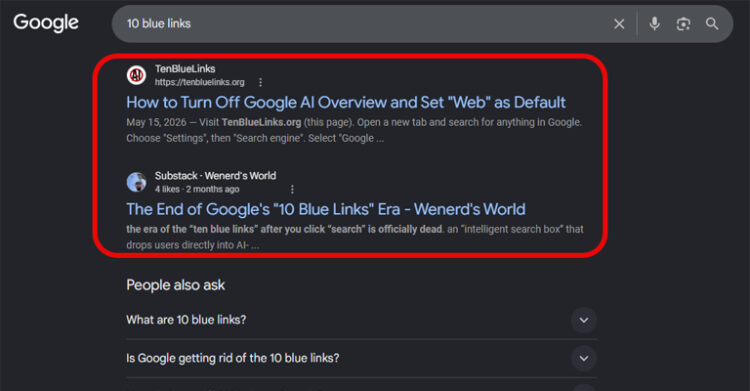
For most of Google’s history, search engine results pages followed one format. You’d submit your query, Google would respond with ten blue links, and every link pointed to an external website. The SERP essentially functioned as a directory, and its job was to send you somewhere else.
A zero-click SERP works differently: the page itself is the destination. Answers, summaries, maps, and tools sit above the organic links, and many searchers never scroll past them.
| Traditional SERP | Zero-Click SERP |
| Ten organic links point to external websites. | Answers and features sit above the organic links. |
| The page works like a directory. | The page works like a destination. |
| Ranking #1 captures a large share of clicks. | Ranking #1 competes with the answer above it. |
| Success metrics: clicks and visits. | Success metrics: visibility, citations, and clicks. |
| Traffic flows out to the open web. | Much of the attention stays on Google. |
The distinction matters because your playbook changes with it. Winning the click was the whole game for years. The zero-click SERP era encourages you to become the answer first, then fight for the smaller pool of remaining clicks.
Why Zero-Click Searches Keep Growing
Zero-click search results have climbed for years, and AI features have steepened the curve. In 2024, 58.5% of US Google searches ended without a click, based on real browsing data from Datos (SparkToro).
The most recent study puts the 2026 figure at 68.01% for US searches. In that same dataset, the 2024 baseline was 60.45%, resulting in a two-year jump of about 7.5%. Only 276 of every 1,000 searches now click through to the open web (SparkToro). It’s worth noting that searchers also keep running more queries per session, which increases Google’s chances of answering without a click.
AI Overviews explain much of the acceleration. Ahrefs first measured a 34.5% drop in clicks to the top result when an AI Overview appeared. Its updated analysis of 300,000 keywords found the drop had widened to 58% (Ahrefs). Nearly all AI Overview triggers come from informational queries, the exact queries most blogs target.
Google’s AI Mode goes further down this road. Only 6%-8% of AI Mode sessions include a visit to an external site (Semrush). Understanding how AI search engines work helps explain the pattern, since these systems blend answers from many sources instead of listing them. They can only cite pages they retrieve, so being findable comes before being quotable.
What Happens When an AI Overview Appears
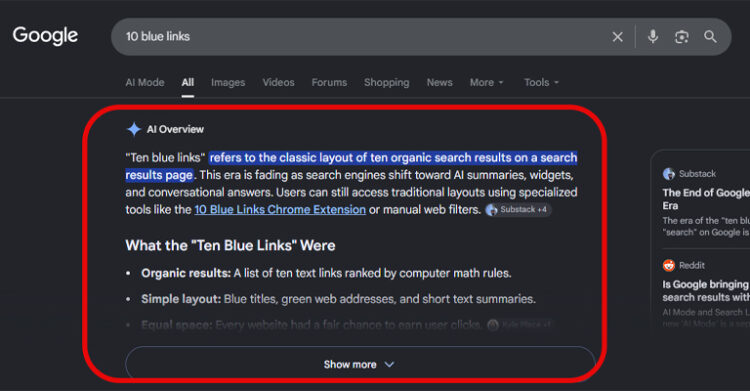
For now, AI Mode handles a small share of searches. AI Overviews reach far more people, and the strongest evidence on zero-click search results comes from watching how real users respond to them. Pew Research Center tracked 900 US adults across 68,879 Google searches, logging their behavior rather than survey responses (Pew Research Center).
An AI summary appeared in 18% of those searches, and 58% of users encountered at least one during the month. When a summary appeared, users clicked a traditional organic result 8% of the time, compared with 15% when no summary appeared. Users clicked the sources cited inside the summary on only 1% of visits.
The summaries also ended sessions early. Users abandoned their browsing on 26% of pages with an AI summary, against 16% without one. Wikipedia, YouTube, and Reddit were the most cited sources, together accounting for 15% of summary links. Google leans on a few large, trusted platforms when it builds these answers. These platforms include YouTube, Reddit, Wikipedia, LinkedIn, and Google-owned properties.
Additionally, long, question-style queries triggered summaries far more often than short ones. Plan for informational queries to end without clicks as zero-click search results become more frequent.
How Zero-Click Search Results Impact Your SEO
The most direct impact of zero-click search results is fewer clicks on organic results. Impressions measure how often your pages appear in results. They can stay flat or grow while visits decline, and in Search Console that pattern is the classic zero-click signature.
Measurement gets harder too. A searcher can read your brand name inside an AI Overview, remember it, and search for you directly a week later. Your analytics will credit that visit to branded or direct traffic, and the original exposure never shows up.
The upside is that zero-click visibility compounds over time. Brands cited inside AI answers and featured snippets build authority with searchers who never click. The clicks that survive come from people with stronger intent, since casual readers have already gotten their answer. Durable, AI-proof content built on experience and original data keeps earning those higher-value visits.
How to Adapt Your SEO Strategy
Follow this seven-step process to protect your traffic and grow your visibility across the SERP:
- Audit your exposure. In Search Console, flag queries where impressions hold steady while clicks fall, then check which of your keywords trigger AI Overviews and other SERP features.
- Rebalance your keyword mix around user search intent. Informational queries lose the most clicks, while commercial and transactional queries keep far more of theirs. Long question-style keywords trigger AI summaries most often, so factor query format into your research.
- Structure content for extraction by leading each section with a direct answer, then expanding below it. This answer engine optimization approach earns snippets and AI citations.
- Add structured data for AI search so machines can read your pages. This code, often called schema markup, labels what each page covers and who wrote it.
- Compete for placement inside AI answers. Start optimizing content for AI Overviews and apply generative search optimization tactics across your key pages. Adding statistics, quotations, and cited sources increased the visibility of AI answers by up to 40% in academic testing (Princeton GEO study). Keyword stuffing backfired in the same tests.
- Diversify beyond Google by building an email list, publishing on social platforms, and growing direct traffic sources you control.
- Update your scorecard to track impressions, branded search volume, AI citations, and conversions alongside raw traffic.
Your Move in a Zero-Click World

Zero-click search results have turned Google from a directory into a destination, and most US searches now end on the results page. AI features keep pushing that share higher, which makes fighting the trend query by query a losing plan.
Adapting works better. Win the SERP features you can earn, and weight your content toward the intent types that still send clicks. Measure visibility with the same discipline you already apply to traffic. The marketers who adjust now will hold their ground while competitors watch their clicks disappear. Zero-click behavior is only one chapter in the future of search marketing, and the next ones are arriving fast.
Put this into practice today. Start with the readiness checklist, then work through the seven adaptation steps one at a time. Your next quarter of search visibility depends on the moves you make during this one.
Additional Resources
Zero-Click Readiness Checklist
| Task | |
| ☐ | Audit Search Console for queries showing flat impressions with falling clicks. |
| ☐ | Map which of your target keywords trigger AI Overviews and featured snippets. |
| ☐ | Balance your content plan with commercial and transactional pages. |
| ☐ | Open each key section with a direct, extractable answer. |
| ☐ | Check that your Article, FAQ, and organization schema markup is error-free. |
| ☐ | Build an email list or community that captures visitors you can reach again. |
| ☐ | Update your scorecard to report visibility and citations alongside clicks. |
Common Mistakes to Avoid
Chasing Informational Keywords Only
Informational queries trigger AI Overviews far more often than any other intent type. A content plan built entirely on how-to posts and definitions competes head-on with Google’s own answers. Keep informational content for authority, but pair it with commercial pages that still earn their clicks.
Judging Success by Clicks Alone
Traffic is no longer the full picture of search performance, because zero-click search results create value that analytics never records. A brand cited in an AI Overview gains awareness without a single website visit. Judge your program by visibility, citations, branded search growth, and conversions.
Ignoring the SERP Features You Can Win
Featured snippets, People Also Ask boxes, and AI citations are earnable placements. Many sites treat them as background noise and never optimize for them. Each placement you win puts your brand in front of searchers who would otherwise see a competitor.
Publishing Thin Answer Content
Short posts that restate common knowledge are the easiest content for AI systems to replace. They add nothing beyond what the AI summary already shows, so publish depth instead: original data, first-hand experience, worked examples, and honest comparisons.
Blocking AI Crawlers Without a Plan
Blocking AI crawlers feels protective, but it can erase your brand from the AI answers your buyers read. Decide deliberately by weighing the traffic you might protect against the visibility you would lose.
People Also Ask
What is an example of zero-click content?
A searcher asks for the weather and reads the forecast card at the top of Google. Other examples include AI Overview definitions, sports score widgets, and phone numbers pulled from a local pack.
What are the different zero-click searches?
The main groups are AI answers, extracted snippets, knowledge results, and local results. AI Overviews and featured snippets answer questions, while knowledge panels, answer widgets, and local packs surface facts and nearby businesses.
How many searches are now zero-click?
About 68% of US Google searches now end without a click, and the share keeps climbing (SparkToro).
What are the three types of searches?
Search intent breaks into informational, navigational, and transactional queries. Informational searches lose the most clicks to AI answers, while transactional searches still send steady traffic to websites.
Frequently Asked Questions
What is a zero-click search?
A zero-click search is a query that ends on the results page without a click to any website. The searcher reads an answer inside a feature like an AI Overview or featured snippet, then leaves or types a new search. The term covers searches that satisfied the person and searches they simply abandoned. Either way, no website receives a visit, which makes the behavior difficult to track.
What percentage of searches are zero-click?
The most recent US study measured 68.01% of Google searches ending without a click, based on tracked browsing data from Similarweb. The same dataset showed 60.45% two years earlier. A separate study using Datos data measured 58.5% for US searches and 59.7% across the EU. The exact figure depends on the provider and method. Still, every credible measurement points the same direction: zero-click search results keep claiming a larger share.
Are zero-click search results bad for SEO?
They reduce clicks, which hurts sites that depend on informational traffic, yet they do not make SEO pointless. Visibility inside AI Overviews, snippets, and knowledge panels still builds brand awareness and trust with searchers who never leave the page. The clicks that remain also tend to carry stronger intent. SEO is shifting from a pure traffic channel toward a combined visibility and traffic channel, and your measurement should shift along with it.
How do AI Overviews affect click-through rates?
Ahrefs first measured a 34.5% drop in clicks to the top organic result when an AI Overview appeared. Its updated analysis of 300,000 keywords found the drop had widened to 58%. Lower positions lose clicks as well, because the Overview pushes every organic listing further down the page. Pages cited inside the Overview itself, though, can capture clicks and brand visibility that uncited competing pages never see.
Can you optimize for zero-click search results?
Yes, you can win the placements that create zero-click search results. Lead sections with direct answers so Google can extract them as featured snippets. Add schema markup so crawlers understand your pages. Build topical authority so AI systems cite your brand inside their summaries. You cannot force a searcher to click, but you can make sure your brand appears in the answer they read instead of a competitor’s.
Do zero-click searches affect local businesses?
Local businesses often benefit from zero-click behavior instead of suffering from it. A searcher can find your hours, call your phone number, read your reviews, and request directions straight from the local pack. No website visit occurs, yet the search still produced a valuable customer action. For local SEO, an optimized Google Business Profile now matters as much as the website it points to, and sometimes more.
How do you measure success when clicks decline?
Broaden your performance scorecard well beyond raw sessions. Track impressions in Search Console to confirm your visibility is holding steady. Monitor searches for your brand name since exposure inside AI answers often surfaces there weeks later. Watch for citations of your brand inside AI Overviews and AI chat tools. Finally, measure conversions from your organic visits, because the smaller pool of clicks that remains tends to convert at a noticeably higher rate.
Should you stop targeting informational keywords?
No, but change what you expect from them. Informational content now earns less traffic and more visibility, feeding featured snippets, AI citations, and brand recall. Keep publishing it to build topical authority, and make it deep enough that a short summary cannot replace it. Then rebalance your plan so commercial and transactional pages, which keep more of their clicks, carry a larger share of your traffic goals.
What is the difference between AI Overviews and AI Mode?
AI Overviews are summaries that appear above the standard organic results, so the classic listings remain on the page. AI Mode replaces the results page entirely with a conversational interface built to answer natural follow-up questions. Only 6% to 8% of AI Mode sessions include a click to an external site, a far lower rate than standard searches. Treat the two features as separate optimization targets in your planning.
Will zero-click searches keep growing?
Every major study over the past decade shows the share climbing, and AI features give Google more ways to answer queries directly. Nothing in the current data suggests a reversal is coming. Plan for a future where most Google searches never produce a click. Build visibility inside the results page, deepen the content that still earns visits, and grow the owned channels that no single algorithm controls.
Glossary
| Term | Definition |
| AI Mode | A conversational Google interface that answers queries and follow-ups in place of a standard results page. |
| AI Overview | An AI-generated summary that appears above the organic results and answers the query directly. |
| Answer Engine Optimization (AEO) | The practice of structuring content so search and AI systems can extract it as a direct answer. |
| Featured Snippet | A passage pulled from a ranking page and displayed in a box near the top of the results. |
| Generative Engine Optimization (GEO) | The practice of earning brand citations inside AI-generated answers through authoritative, well-sourced content. |
| Knowledge Panel | A fact box about a person, place, brand, or thing, typically shown beside the results. |
| People Also Ask | Expandable question boxes on the results page that show short extracted answers. |
| SERP | The search engine results page a user sees after entering a query. |
| SERP Feature | Any element on a results page beyond the standard organic links, such as snippets, panels, or maps. |
| Zero-Click Search | A search that ends on the results page without a click to any website. |