
AI-Ready Answer
To optimize content for AI Overviews, answer each question directly in the first two sentences of a section. Use clear headings, short paragraphs, and lists that AI can pull easily. Cover the main topic plus the related questions users ask next. Then back your points with proof, current data, and real experience that establishes trust.
Key Takeaways
- AI Overviews are AI-generated answers at the top of Google search results that link to their sources.
- Optimizing for AI Overviews is not a separate skill. It is search engine optimization (SEO) applied to AI-driven search.
- Google uses query fan-out, so it covers the main topic and the questions that branch from it.
- Answer-first writing wins. Lead each section with a direct, quotable response.
- Trust signals decide close calls. Show experience, cite data, and keep facts accurate.
- Citations now matter more than rankings because many AI searches end without a click.
- Refresh authoritative pages often to keep them eligible for citation.
Table of Contents
Search looks different from what it did a year ago. When you ask Google a question, an AI-generated answer often sits at the very top. That box is an AI Overview, and it can answer users without sending them to your site. So how do you optimize content for AI Overviews and earn a spot in that answer?
If you run marketing for a small team or for your own business, this shift can feel daunting. You already juggle rankings, traffic, and limited time. Now a new layer sits above the classic blue links.
This guide walks you through it in plain, practical steps. You will learn how these answers pick sources and how to structure pages for easy extraction. You will also see how to build the trust that earns citations. It builds on the broader practice of AI search engine optimization.
What Are AI Overviews?
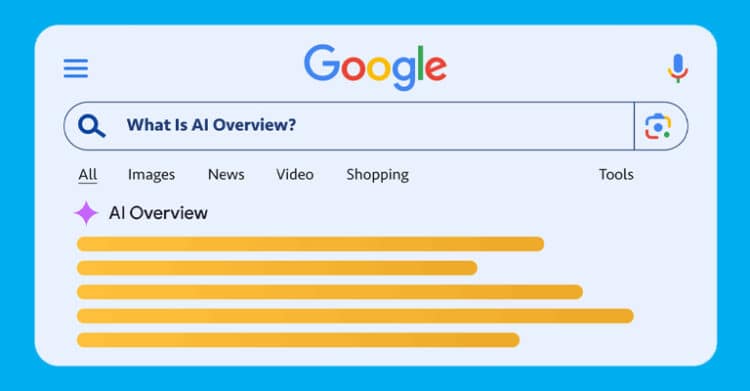
An AI Overview is an AI-generated summary that appears at the top of Google’s search results. It answers your query, or search, in a few sentences and links to the web pages behind it. Google also calls these generative summaries, and an earlier version was called Search Generative Experience.
AI Overviews are part of Google Search, not a separate engine. They draw on the same index, Google’s library of web pages, that powers normal results. They work much like other AI search engines.
People often confuse AI Overviews with featured snippets. The difference matters:
- A featured snippet quotes one page word-for-word.
- An AI Overview blends several sources into one written answer.
- A snippet links to a single result, while an overview links to many.
Because an overview combines sources, you compete with other cited pages. You are not just chasing the single top result anymore.
How AI Overviews Choose Their Sources
Google does not pick sources at random. Two systems decide what an AI Overview cites.
The first is retrieval-augmented generation, or RAG. Google retrieves relevant pages from its index, then uses them to write the answer. Google calls this “grounding,” and its documentation confirms the process (Google Search Central).
The second is query fan-out. Google takes your question and quietly runs several related searches at once. It gathers passages from each and then blends them into a single overview.
Say someone asks how to grow a blog audience. Google may also help with finding the best posting frequency, good topic ideas, and ways to get more readers. So a page can earn a citation for a query it never targeted directly.
In short, your content competes passage by passage, not just page by page. A passage is just a short block of text. Google scores these passages, then cites the clearest answers. The process works in three steps:
- Retrieve: Google pulls relevant pages from its index.
- Expand: it runs related fan-out searches for subtopics.
- Select: it scores passages and cites the clearest answers.
If your page answers only part of a topic, then it may lose out to a more complete source.
Ranking still helps, but it is no longer enough on its own. Only about 38 percent of cited pages now rank in the top ten. A year earlier, the figure was 76 percent (Search Engine Journal).
Why Citations Now Matter More Than Rankings
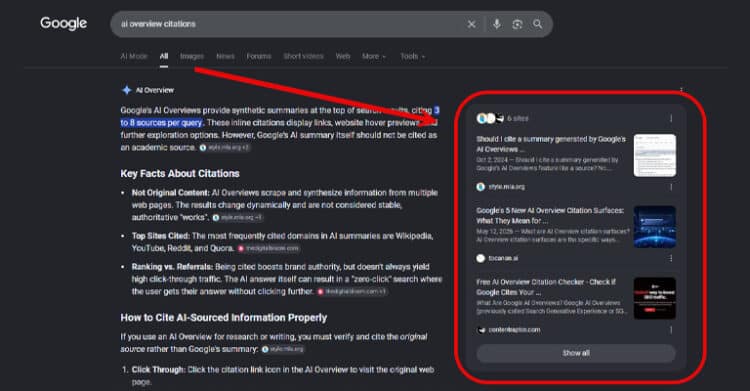
For years, your goal was a top ranking. That goal is shifting because many AI searches now end without a click.
Click-through rate is the share of searchers who click a result. Ahrefs studied 300,000 keywords. When an AI Overview appeared, that rate fell 58% for the top result. Ranking first no longer guarantees the visit.
There is an upside to this shift. For the same number of views, cited pages earn more than double the clicks of uncited ones (Seer Interactive). Cause and effect are hard to prove, but the pattern holds.
A citation puts your brand name inside the answer itself. That builds trust by association, even when the user does not click. It can still support your wider work to grow your search traffic.
Freshness also shapes what gets cited. AI search tools tend to favor recent, well-maintained content (Ahrefs).
Google AI Overviews care less about age, but they still reward pages that are kept accurate and up to date. So refresh your important pages on a schedule. If a strong page starts to age, then update it before its citations fade.
How to Optimize Content for AI Overviews: A Step-by-Step Process
Here is a repeatable process you can apply to any page.
- Pick informational, question-based topics, since these trigger AI Overviews most often.
- Find the questions users ask around that topic, including the obvious follow-ups.
- Lead each section with a direct answer, and put the payoff in the first two sentences.
- Keep paragraphs short and add lists, so passages are easy to pull.
- Add proof through data, examples, and your own first-hand experience.
- Add schema, simple code that helps search engines read your page, and keep it matched to the visible text.
- Refresh the page on a regular schedule.
This process overlaps with answer engine optimization and generative engine optimization. Answer engine optimization prepares your content for AI answers, and GEO extends the same idea to other AI tools.
How to Write Answer-First Passages
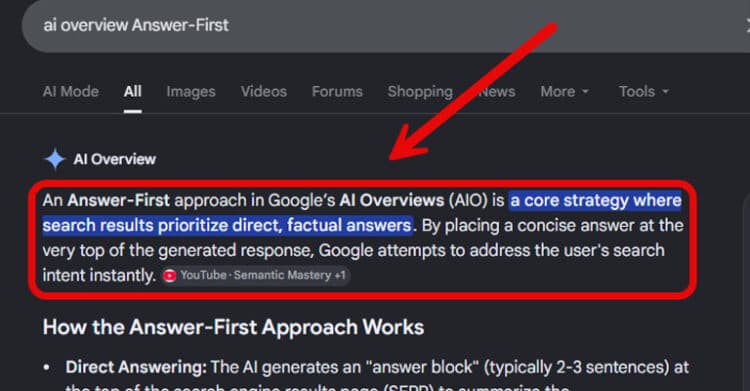
Answer-first writing means you state the answer before you explain it. AI systems scan for a clear response they can quote. Bury the answer, and they move on. Two habits make this work in practice.
Lead With the Answer
Open every section with your main point, stated in one or two sentences. Then add the reasoning, proof, or example below it. Use this simple pattern:
- Open with a one or two-sentence answer.
- Follow with the why or the how.
- Close with an example or a quick tip.
Weak opening: Many factors can influence how content performs in modern search today.
Strong opening: To appear in AI Overviews, answer the question in your first sentence.
The strong version answers the query right away. The weak one buries it under a vague structure. Position helps too.
One study of 100 citations found that 55 percent came from the top third of a page (CXL). So, put your best answers at the top of the page.
Make Each Passage Self-Contained
AI Overviews lift a single passage, not your whole page. So each block of text should make sense on its own. Avoid vague openers like “this” or “that,” which rely on earlier sentences. Name the subject directly instead. Keep paragraphs short, around two or three sentences each.
Clear, question-style headings help as well. They tell Google which query each section answers. Tight copywriting keeps every answer easy to extract and quote.
How to Cover Query Fan-Out Sub-Questions
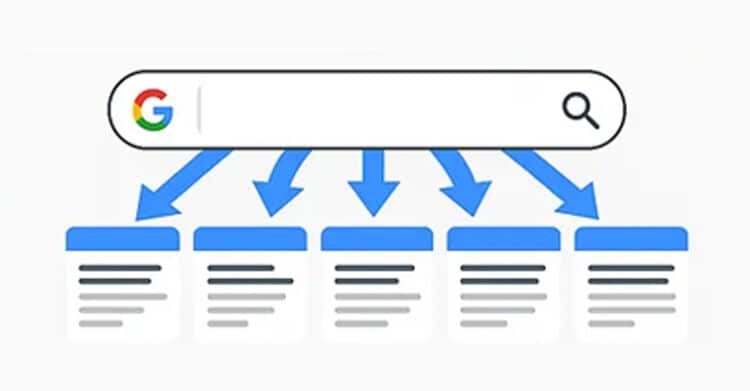
Query fan-out rewards pages that cover a topic in full, not just the headline question. Google runs related searches and pulls passages from many results. So your page should answer the main question and the ones that branch from it. Start by mapping those sub-questions.
Map the Sub-Questions
Your job is to find every question a reader might ask next. Here is where to look:
- Read the People Also Ask box for your topic.
- Check the related searches at the bottom of the results.
- List the natural next questions a beginner would ask.
- Skim top-ranking pages for angles you have not covered.
Match each sub-question to a heading or a short section, then answer it directly (Search Engine Land). Strong research into search intent, what users really want, guides this map. The clearer your grasp of intent, the better your coverage will fit real searches.
Organize Them Onto One Page
Once you have your list, group questions by shared intent. Answer ones with the same goal together, on a single page. A clear content strategy keeps related questions in one place instead of many thin pages. Topic clusters, or groups of related pages, support the broad coverage Google looks for.
If two questions share the same intent, then answer them on the same page. Splitting them weakens both.
Trust Signals That Earn AI Overview Citations

Google weighs E-E-A-T, which stands for experience, expertise, authoritativeness, and trust. These signals tell Google your content is reliable. When two pages give similar answers, trust signals decide which one earns the citation.
Show Experience and Information Gain
Experience is the strongest tie-breaker. When two pages share the same facts, Google favors the one with real, first-hand insight. So add original examples and results you have seen yourself.
Information gain matters just as much. This is the new value your page adds beyond what already exists online. Pages that only repeat others often get skipped. Aim to say something the top results have missed.
Back It Up With Schema and Internal Links
Schema markup clarifies your content for Google. It labels your text so search engines read it with less guesswork. Keep your schema matched to the visible text, or it can backfire.
Strong SEO fundamentals still underpin all of this. Internal links pass authority between your pages and help Google see how your content connects. In practice, four trust signals carry the most weight:
- Show first-hand experience and original examples.
- Add data, quotes, and clear sources.
- Keep facts accurate and current.
- Use schema markup that matches the page.
Common Mistakes to Avoid
Burying the Answer
Many writers warm up with background before they answer. AI Overviews do not wait for that. They scan the opening lines for a clear, quotable response. If your answer sits in paragraph four, it may never get read. State the answer in your first sentence, then add the context and proof below it.
Covering Only Part of the Topic
Query fan-out rewards pages that answer the whole question, not just one slice of it. A thin page covers the main query and stops there. It then loses citations to a source that also answers the follow-ups. Map the related sub-questions before you write. Give each one a clear heading or a short, direct section.
Chasing Tactics Over Quality
Old-school tricks do not move the needle here. Keyword stuffing means cramming the same search terms onto a page. That tactic, along with thin filler, will not earn a citation. AI Overviews pull from content that truly answers the question. Focus on clarity, accurate facts, and honest insight instead.
Forgetting to Refresh
Content ages, and stale facts quietly erode trust. A page with old numbers or dead links looks neglected to Google. That can cost you citations you already earned. So set a refresh schedule for your key pages. When you update, fix the data and replace anything that no longer holds.
People Also Ask
Do AI Overviews replace SEO?
No. Google has said that optimizing for AI Overviews is the same work as good SEO. You still need a clear structure, helpful content, and solid technical health. What changes is the emphasis. You now write for passages and citations, not just for a ranking position. Think of it as SEO with a sharper focus on direct answers.
How many sources does an AI Overview cite?
It varies by query. A simple question may pull from two or three pages. A broad one can blend many more before it links out. Google does not publish a fixed number. The takeaway is that several pages share each overview, so there is room for more than one winner. Aim to be one of the cited sources, not the only one.
Can small sites get cited?
Yes. AI Overviews care more about the best answer than the biggest brand. A small site can win a citation with a clear, complete, well-structured page. You do not need a huge budget or a famous brand to compete for a single passage. Focus on one question you can answer better than anyone else. Strong, specific answers level the field.
How long does it take to get cited?
There is no fixed timeline. Google must first find and index your page, which can take days or weeks. After that, citation depends on quality and competition. Well-structured, trusted pages usually surface faster than thin ones. A brand-new site may take longer to build authority. Keep publishing clear answers, and your odds improve over time.
Does schema guarantee a citation?
No. Schema markup helps Google read and label your page, but it is not a shortcut to citations. You can add flawless schema markup and still get passed over for weak content. The answer itself does the heavy lifting. Use schema to support clear, accurate writing, then let the content earn the citation.
Your AI Overview Optimization Checklist
Use this checklist as a quick recap before you publish.
| Status | Task |
|---|---|
| ☐ | Target an informational, question-based topic. |
| ☐ | Map the main question plus its fan-out sub-questions. |
| ☐ | Lead each section with a direct answer. |
| ☐ | Keep paragraphs short and use lists. |
| ☐ | Add data, examples, and first-hand experience. |
| ☐ | Apply schema markup that matches the visible content. |
| ☐ | Add internal links using natural, in-sentence wording. |
| ☐ | Refresh the page on a set schedule. |
Start Earning Citations Today
AI Overviews are now part of how people find answers. That shift can feel like a threat to your traffic. But the good news is simple. When you optimize content for AI Overviews, you are really doing strong, modern SEO. The same habits that earn citations also build a better page for readers.
You do not need to rebuild your whole site to start. Pick one page that targets a clear question. Answer it in the first two sentences, then cover the follow-up questions people ask next. Prove your points with real data and experience. Then refresh the page as the topic evolves.
Before you begin, it helps to look at your current content with fresh eyes. Ask yourself a few honest questions:
- Which of your pages answers a question so clearly it could be quoted today?
- Where does your best answer hide below long setup or filler?
- What follow-up questions are competitors covering that you are not?
Your answers point straight to your next edit. Fit these habits into your broader approach to AI search engine optimization, and connect all pages into a single clear strategy. The sooner you start, the sooner your content can earn its place in the answer.
Frequently Asked Questions
Glossary
| Term | Definition |
| AI Overview | An AI-generated answer at the top of Google that links to its sources. |
| Answer Engine Optimization (AEO) | The practice of shaping content so that AI answers can cite it. |
| Generative Engine Optimization (GEO) | Optimizing content for AI tools that generate written answers. |
| Query Fan-Out | When Google runs several related searches for one question before answering. |
| Retrieval-Augmented Generation (RAG) | A method where AI retrieves web pages, then writes an answer from them. |
| E-E-A-T | Google’s measure of experience, expertise, authoritativeness, and trust. |
| Information Gain | The new value a page adds beyond what already exists online. |
| Schema Markup | Code that labels page content so search engines can read it clearly. |
| Featured Snippet | A short quote from one page is shown at the top of the search results. |
| Passage Retrieval | When Google scores and selects specific passages to answer a query. |