
Quick Answer
Answer engine optimization (AEO) helps AI tools pull clean answers from your content and credit you as the source. AI platforms like ChatGPT, Perplexity, and Google AI Overviews now answer many queries directly. Users get the answer without ever visiting a website. AEO keeps your brand visible in those answers. The work rests on three fundamentals: clear structure, solid evidence, and strong technical foundations.
Key Takeaways
- Answer engine optimization, or AEO, helps AI tools find, trust, and cite your content as a direct answer.
- AEO builds on traditional SEO. Strong rankings still feed most AI citations.
- Lead every section with a clear 40 to 60-word answer to a specific question.
- Statistics, expert quotes, and original data increase your odds of being cited.
- Schema markup, fast load times, and crawlable HTML all help AI tools read your pages.
- Track citation share and AI referral traffic, not just rankings and clicks.
- AEO is a layer added on top of SEO, not a replacement for it.
Table of Contents
What Is Answer Engine Optimization?

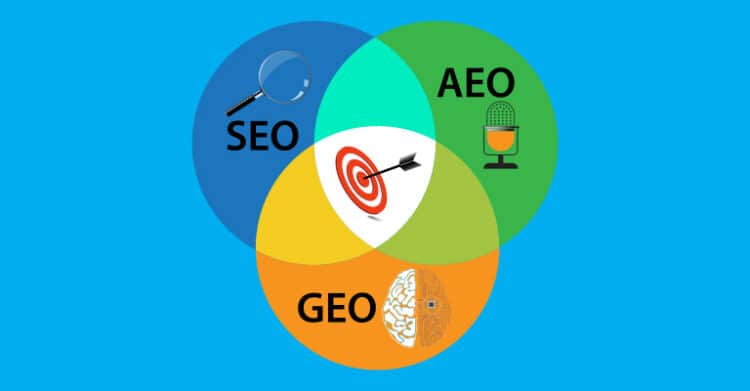
Answer engine optimization (AEO) is the practice of structuring content for AI tools. The goal is simple: help AI tools read your content, trust it, and cite it as a direct answer. AEO targets platforms that build answers, not platforms that return blue links. Some teams call this generative engine optimization (GEO) or AI search optimization. The labels overlap. The work is the same: shape your content so AI engines can pull a clean answer from it.
AEO requires SEO. AI tools rely on live web search to build their answers. Pages with strong search engine optimization are more likely to be cited. AEO is a layer that sits on top of solid SEO, not a replacement for it.
How AEO Differs from Traditional SEO
Traditional SEO is about ranking in a list of links. AEO is about being the answer inside an AI summary. Both share the same foundation: helpful content, clean structure, and credible signals. A solid SEO strategy still feeds most AI citations. The differences show up in goals and metrics.
| Dimension | SEO | AEO |
| Goal | Rank in search results | Get cited in AI answers |
| Content unit | Page | Fact, answer, or section |
| Format | Comprehensive content | Answer-first, scannable sections |
| Trust signals | Backlinks and authority | Authority plus clarity and freshness |
| Metrics | Position, clicks, traffic | Citations, share of voice |
| Structure | Keyword targeting | Question-and-answer chunks |
Why AEO Matters Right Now
Search behavior is shifting. Roughly 58.5% of US Google searches now end without a click (SparkToro). Google AI Overviews appear for nearly half of all queries. Traditional search volume is projected to drop 25% by the end of 2026 (Gartner).
That shift creates a new visibility problem. If users get the answer from an AI tool, they may never click through. Your brand only counts when the AI cites you by name. AEO is how you stay in the conversation as your digital strategy adapts to fewer site visits.
How Answer Engines Find and Cite Your Content

Answer engines pull together responses through a process called retrieval-augmented generation, or RAG. The AI runs a live search, selects a few trusted sources, and combines what it finds into a single answer. Knowing the steps helps you optimize for each one.
A useful mental model: AI tools look for answer fragments they can trust and combine. They are not looking for pages that broadly cover a topic. A section that opens with a clear answer and follows with proof is more useful than a long introduction.
The Five-Stage Retrieval Process
- Query interpretation: The AI figures out what the user actually means behind the words of the query.
- Search and retrieval: The engine pulls a list of likely sources from Bing, Google, or its own page database.
- Ranking and selection: Pages get scored on authority, relevance, structure, and freshness.
- Answer generation: The AI extracts key facts and rewrites them in plain language.
- Citation: The engine names which source each fact came from, with a link.
Each stage rewards different things. Search engine optimization helps your content get included in stages one through three. AEO mostly shapes stages four and five, where the AI builds the answer and links to sources.
What Signals Drive Citations
A Princeton-led study tested how changes in content affect citation rates across thousands of queries (arXiv). The top three methods each lifted visibility by 30 to 40%: adding statistics, expert quotes, and citations. Keyword stuffing actually hurts performance.
Freshness also matters. URLs cited by AI tools are 25.7% fresher than typical Google search results. The data comes from a study of 17 million citations (Ahrefs). AI tools clearly favor recent content.
The pattern is consistent: a clear structure, original data, trustworthy sources, and recent updates. None of these is an exotic tactic. They are good content fundamentals applied with discipline.
The Core Building Blocks of AEO Content

AEO content shares a recognizable shape. It answers a specific question quickly and backs that answer with proof. The structure works for both machines and humans. The discipline overlaps heavily with broader content marketing strategies.
Lead with the Answer
Each section should open with a 40 to 60-word answer to a specific question. AI tools usually scan the first sentences after a heading. If your opening drifts into the background, the engine moves to a competitor that gets to the point faster.
A useful template: state the answer in one sentence, add one or two sentences of essential context, then expand. This works the same way for blog posts, product pages, and FAQs. The same answer-first instinct drives effective copywriting across every format.
Use Question-Based Headings
Most AI prompts are full questions, not keyword fragments. Match that pattern in your headings. Use H2 and H3 tags written as the exact questions readers ask. Strong heading craft starts with user search intent.
A heading worded as a real user question helps the AI map a prompt to that section instantly. Buried, vague headings like “The Bigger Picture” force the engine to guess what is inside.
Add Citations and Original Data
Citing sources directly in your content tells AI tools your work is built on real evidence. The Princeton study cited above showed clear gains from these changes. AI-driven visitors convert at roughly 4.4 times the rate of standard organic visitors (Semrush). Citation pays off in qualified traffic, not just brand exposure.
Original research, customer data, and product benchmarks are especially valuable. AI tools cite the source of a number, not the dozen sites repeating it.
How to Optimize a Page for Answer Engines

Use this seven-step process to take a single page from average to citation-ready. Apply it to your highest-intent pages first since those produce the most measurable lift. These steps also form the core of any solid content optimization workflow.
- Pick one target question. Use Google’s “People also ask” panel or AlsoAsked to find a real query users type into AI tools.
- Write a 40 to 60-word answer block. Place it directly under a heading that mirrors the question.
- Add supporting evidence. Include at least one statistic, one quote, or one citation from a credible source.
- Restructure long paragraphs into short ones of two to four sentences. Add bullets, numbered steps, or tables where they clarify the answer.
- Add an FAQ section with three to five related questions and concise answers, ideally around 70 words each.
- Apply schema markup. Use Article schema for the page and FAQPage schema for the FAQ section.
- Update the page date. Refresh stats and examples on a quarterly cycle so the content stays current.
Treat this as a repeatable workflow, not a one-time fix. AI platforms refresh their training data and live indexes at different rates. AEO is ongoing maintenance, not a one-time project.
Schema Markup and Technical Foundations
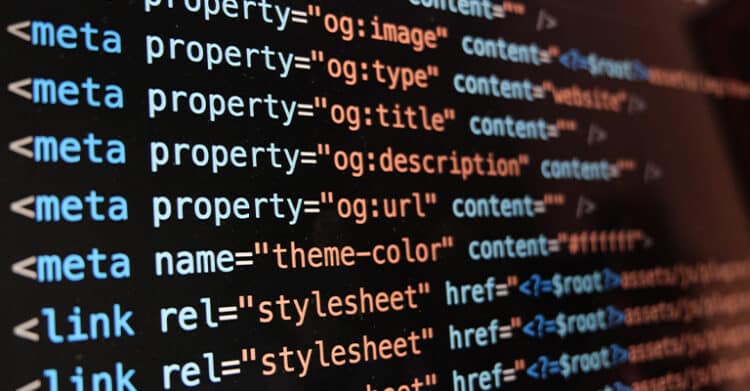
Schema markup is structured data that tells search engines and AI tools what each piece of content is. Implementation guidance comes from Google (Google Search Central). AI engines do not always use schema directly. It still offers an easy way to expose key facts in a machine-readable format.
Schema Types That Matter Most
- Article and BlogPosting: identify your post, author, and publish date.
- FAQPage: marks up question-and-answer pairs that AI tools can extract directly.
- HowTo: tags step-by-step instructions for procedural queries.
- LocalBusiness: helps voice assistants and local AI answers cite you by location.
- Speakable: signals which sections suit voice output.
Crawlability for AI Bots
AI crawlers behave differently from Googlebot. Many of them do not run JavaScript, the code that makes pages interactive. Content that loads only after a script runs may be invisible to them. Pages that deliver the full content in the initial HTML are safer for AI citation.
Check your robots.txt file. It is the small text file that tells web crawlers what they can and cannot access on your site. Decide which AI crawlers you want to allow, including GPTBot, OAI-SearchBot, PerplexityBot, ClaudeBot, and Google-Extended. Each platform publishes the technical identifiers for its bots directly (OpenAI). Blocking them removes you entirely from those answer engines.
Page speed and clean HTML still matter. If your page is slow or fails to load, AI tools skip it just as users do. The same technical SEO fundamentals that help Google also help AI engines.
Building Topical Authority and Entity Recognition

AI tools cite sources they recognize as authoritative on a topic. That recognition is built across many pages over time, not from a single article. Topical authority comes from broad, accurate coverage of a subject area.
Entity Consistency Across the Web
Your brand is an entity. AI tools learn about that entity from your site, your social profiles, third-party reviews, and industry publications. If those sources describe you in conflicting ways, the AI is more likely to misrepresent you or skip you.
Audit how you appear on directories, review sites, and social bios. Make sure the basics match: name, description, services, and key facts. Consistency is a core piece of off-page SEO and makes your brand easier to cite.
Topic Clusters and Content Coverage
Topic clusters group related pages around a central pillar. The pillar covers a broad topic, and supporting posts cover specific subtopics in depth. This structure signals that you have authority across an entire subject, not just one keyword.
AEO rewards depth. Five thin posts on the same topic almost always lose to one strong pillar with focused supporting articles.
How to Track AEO Performance
You cannot improve what you do not measure. Traditional SEO metrics still apply, but they no longer capture the full picture. Track citation visibility alongside rankings and clicks.
What to Measure
- AI citation share. How often do AI tools mention you for your priority topics?
- Branded search volume. Are more people searching your brand name after seeing AI mentions?
- AI referral traffic. Visits from chat.openai.com, perplexity.ai, gemini.google.com, and others.
- Engagement of AI traffic. Time on page and conversion rates from AI sources.
- Sentiment of mentions. Whether the AI describes you accurately and favorably.
Tools to Use
Google Search Console still covers the SEO foundation. Google Analytics 4 reveals AI referral sources. Specialized AEO tools track brand mentions across multiple AI platforms in one dashboard.
You can also run a simple manual workflow each week:
- Pick 10 to 20 priority questions your audience asks.
- Test each one in ChatGPT, Perplexity, and Google AI surfaces.
- Note when you appear, when competitors appear, and where the AI is wrong.
- Monitor referral traffic from AI domains in your analytics.
- Refresh any pages that lose visibility or citation share over time.
Common AEO Mistakes to Avoid
Most AEO problems trace back to a small list of avoidable mistakes. Here is what to watch for.
Burying the Answer
Long introductions push the answer too far down the page for AI tools to find. Lead with the answer, then expand. Save the storytelling for sections where it is genuinely useful.
Treating AEO as a Replacement for SEO
Skipping the basics of SEO is a fast way to disappear. AI tools mostly cite pages that already rank. If you are not in the top results, you are not in the running for citations either.
Using Vague, Branded Headings
Headings like “Our Approach” or “The Big Picture” tell an AI nothing. Use headings that match real user questions. The same discipline applies when you write blog titles. Specific headings get cited; vague ones get skipped.
Ignoring Freshness
Stale stats and outdated examples push your pages out of AI answers. AI tools favor recent content. Update high-value pages on a quarterly cycle.
Blocking AI Crawlers Without a Plan
Some sites block AI bots in robots.txt without realizing it. If you want to be cited by ChatGPT, Claude, or Perplexity, you must let their crawlers in.
Optimizing for Only One Platform
Each AI tool has its own quirks. Pages that win citations in ChatGPT may be ignored by Google AI Overviews. Test your priority questions across at least three tools. Then optimize for patterns that work everywhere, not just on one platform.
People Also Ask
Is AEO the Same as SEO?
No. AEO and SEO share fundamentals but optimize for different outcomes. SEO targets rankings in a list of links. AEO targets citations inside an AI answer. Most teams need both.
Do I Need Schema Markup for AEO?
It is not strictly required, but it helps. Schema makes your content easier for both search engines and AI tools to interpret. FAQPage and Article schema are the highest-impact starting points.
How Long Does AEO Take to Show Results?
Established sites with strong SEO often see early citation gains within 4 to 6 weeks. Newer sites usually need three to six months of consistent work. The timeline is longer for sites still building their online reputation.
Will AI Search Replace Google?
Not in the near term. Google still handles the majority of searches, and AI tools rely on its index. The mix is shifting, though. Smart teams optimize for both SEO and AEO instead of betting on one.
Can Small Businesses Compete with Larger Brands in AI Answers?
Yes. AI tools care about clarity, structure, and topical depth. A focused small business with strong content often outperforms a larger brand whose pages are scattered or outdated.
What Is the Best Content Length for AEO?
There is no fixed length. AI tools extract sections, not whole pages. Short, well-structured answers can get cited just as often as long guides. The keys are a clear answer and a credible source.
AEO Quick-Start Checklist
Use this checklist on any page you want cited by AI tools. Aim to check every box before you publish or update.
| Task | |
|---|---|
| ☐ | Page targets a specific user question |
| ☐ | Heading mirrors the question wording |
| ☐ | Each section opens with a 40 to 60-word answer |
| ☐ | Includes at least one statistic with a citation |
| ☐ | Uses short paragraphs of two to four sentences |
| ☐ | Has bullets, numbered steps, or a table where useful |
| ☐ | Includes an FAQ block with three to five questions |
| ☐ | Article and FAQPage schema applied |
| ☐ | Page loads in under three seconds |
| ☐ | Last-updated date shown and current |
Where Answer Engine Optimization Goes from Here
AEO is still a young discipline. The platforms, prompts, and citation patterns will continue to shift over the next few years. The fundamentals, however, are stable. Clear answers, credible evidence, and clean technical foundations will keep paying off no matter which AI tool dominates next.
A useful way to frame the relationship: SEO gets you discovered, AEO gets you quoted. You need both.
Pick one high-traffic page on your site this week. Apply the seven-step process from this guide. Note where you currently appear in AI answers, then check again in a month. That single test will teach you more than any framework on its own.
FAQ
What does AEO stand for?
AEO stands for answer engine optimization. It is the practice of structuring content so AI tools pull clean answers and credit you as the source. AEO targets platforms like ChatGPT, Perplexity, Google AI Overviews, and voice assistants. Some marketers call it generative engine optimization, or GEO. The two terms share the same core goal: getting cited inside AI-generated answers, not just in search rankings.
Is AEO replacing traditional SEO?
No, AEO is not replacing traditional SEO. The two work together. AI answer engines use live web search to gather sources. Pages that already rank well in Google are far more likely to be cited. Strong SEO remains the foundation. AEO adds a layer of structure and clarity on top. It optimizes for how AI tools select and quote sources, not just where pages rank.
How is AEO different from generative engine optimization (GEO)?
AEO and GEO overlap, but they work at different levels. AEO is page-and snippet-oriented. It optimizes the format of an answer so AI tools can extract it cleanly. GEO is entity-and context-oriented. It builds the credibility your brand needs to be cited in AI-generated responses. Most teams use AEO as the foundation and GEO as the expansion layer on top.
Which AI platforms should I optimize for first?
Start with the platforms your audience actually uses. For most beginner-to-intermediate marketers, that means Google AI Overviews, ChatGPT, and Perplexity. Each has a different mix of source preferences and underlying data sources. Optimizing for Google AI Overviews tends to boost visibility across other channels. They share many of the same ranking signals. Add specialized tracking once the basics are in place.
Do I need to cite original research when using AI?
Original research is not required, but it helps a lot. Studies show that statistics, expert quotes, and unique data points all increase citation rates. If you cannot run primary research, focus on three things. Combine public data in fresh ways. Share genuine customer examples. Cite the strongest public sources. Generic summaries that repeat what every other site says rarely get picked up by AI tools.
Can I do AEO without a developer?
Yes, you can do most AEO work without a developer. Page structure, headings, FAQs, citations, and clean writing are all editorial tasks. Schema markup is often handled by your content management system or a plugin. A developer becomes useful when you need advanced HTML setups, custom schema, or large technical fixes. Start with the editorial layer, since that delivers most of the early gains for small teams.
How often should I update content for AEO?
Update high-value pages at least once a quarter. AI tools weigh recency heavily. Studies show that URLs cited by AI tools are noticeably fresher than the average top-ranked page. Refresh statistics, examples, and any time-sensitive claims. Update the visible “last updated” date on the page and in your schema markup. For evergreen pages with no time-sensitive material, an annual review is usually enough to stay competitive.
What is the biggest mistake beginners make with AEO?
The biggest mistake is burying the answer. Many writers open with background, context, or storytelling, then deliver the answer halfway down the page. AI tools scan the first sentences after a heading, so a slow start often means no citation at all. Lead with a clear, 40 to 60-word answer right under a question-based heading, then expand from there. That single change usually delivers the fastest improvement in citation share.
Glossary
| Term | Definition |
| Answer engine | An AI-powered system that builds direct answers rather than returning a list of links. |
| AEO | Answer engine optimization, the practice of shaping content so AI tools cite it directly. |
| Citation | A reference an AI tool makes to a specific source URL when generating an answer. |
| Crawlability | How easily a search engine or AI bot can access and read pages on your site. |
| Entity | A distinct concept, brand, person, or place that AI tools recognize and track. |
| Featured snippet | A short answer Google pulls into the top of a search result page. |
| Generative engine optimization (GEO) | A close synonym for AEO, with a broader focus on AI recommendations. |
| Knowledge graph | A structured map of entities and the relationships between them. |
| Retrieval-augmented generation (RAG) | A method where AI tools pull live web content to ground their answers. |
| Schema markup | Structured data added to a page that tells machines what the content is about. |
| Topical authority | The reputation a site earns by covering a subject area thoroughly and accurately. |
| Zero-click search | A search that ends without the user clicking through to any external website. |