
You’ve probably felt the frustration of submitting applications into a black hole. You tailor your resume, craft the perfect cover letter, and wait. Then you wait some more. Here’s the problem: according to LinkedIn’s Global Talent Trends report, about 70% of jobs never get posted publicly. Instead, they’re filled through referrals and networking. This guide shows you how to find a job using social media so you can tap into those hidden opportunities before they hit job boards.
Quick Answer: Can Social Media Help You Find a Job?
Yes, social media is now a primary hiring channel.
Over 90% of recruiters use LinkedIn to source and vet candidates, according to Jobvite’s Recruiter Nation Survey. Additionally, 60-70% of jobs are filled through networking before they are posted publicly. By optimizing your social profiles and engaging consistently, you gain access to opportunities that most applicants never see. LinkedIn is the most effective platform for all industries, though Twitter serves tech and media roles well, and Instagram works best for creative positions.
TL;DR
Social media has become a primary hiring channel for recruiters. You should focus your efforts on LinkedIn first, then expand to other platforms based on your industry. Make sure you optimize your profiles with keywords recruiters search for, build genuine connections before you need them, and share content that shows your expertise. Your next job likely exists on social media right now.
Key Highlights
- Hidden job market: Many positions are filled through networking and referrals, not public postings (LinkedIn).
- Recruiter behavior: 92% of recruiters use social media to find candidates (SHRM).
- Profile optimization: LinkedIn members with complete profiles are 40x more likely to receive opportunities (LinkedIn).
- Platform selection: LinkedIn works for nearly everyone, but Twitter and Instagram serve specific industries better.
- Content strategy: Members who post weekly receive 5x more profile views (LinkedIn Economic Graph).
- Networking timing: You get the best results when you build relationships before you need them.
- Photo impact: Profiles with photos receive 21x more views than those without (LinkedIn).
Why Does Social Media Matter for Your Job Search?

Social media matters for job searching because it gives you direct access to recruiters and hiring managers. According to SHRM’s Talent Acquisition Report, 84% of organizations now use social media for recruiting. Traditional job searching puts you in a crowded pool with hundreds of other applicants. Social media flips this dynamic completely. Instead of competing with the masses, you position yourself where decision-makers actively look for talent.
What Is the Hidden Job Market?
The hidden job market refers to positions filled through networking and referrals, rather than through public postings. The majority of jobs fall into this category. Managers prefer hiring through their networks because referrals reduce risk. After all, someone vouched for by a trusted connection feels safer than an unknown applicant.
Fortunately, social media gives you access to this market. You can discover opportunities through conversations, comments, and direct messages. For example, a hiring manager might mention that their team is growing. Or a former colleague might share that their company is looking for someone with your skills. These moments happen daily on social platforms, and you can be part of them.
How Do Recruiters Find Candidates on Social Media?
Recruiters find candidates by searching social platforms for specific skills, job titles, and experience levels. According to Jobvite’s Recruiter Nation Survey, 92% of recruiters use social media to find high-quality candidates. When your profile matches their search criteria, you appear in their results. This passive approach means opportunities can find you without you having to apply.
Beyond searching, recruiters also verify candidates they’re considering. CareerBuilder reports that 70% of employers screen candidates on social media before making hiring decisions. They check your social presence to confirm your experience and assess cultural fit. Therefore, a well-managed online identity strengthens your application. You can learn more about managing your online identity effectively on this site.
Which Social Media Platforms Are Best for Finding Jobs?

LinkedIn is the best social media platform for finding jobs across nearly all industries. However, the ideal platform depends on your industry, experience level, and target roles. Understanding each platform’s strengths helps you invest your time wisely. Let’s look at the main options.
Which Platform Should You Use?
- Best for most job seekers: LinkedIn. Works across all industries with built-in job listings and recruiter search tools.
- Best for tech and startup roles: Twitter (X). Real-time conversations and direct access to founders and hiring managers.
- Best for creative portfolios: Instagram. Visual showcase of your work for design, photography, and marketing roles.
- Best for local and hourly positions: Facebook. Community groups and local job postings with geographic targeting.
Why Is LinkedIn the Best Platform for Job Searching?
LinkedIn is the best platform for job searching because it combines job listings, networking features, and content publishing in one place. According to LinkedIn’s own data, 87% of recruiters use the platform to find candidates. Nearly every industry has an active presence, making it effective across fields.
The platform’s job alert feature notifies you whenever relevant positions become available. You can apply directly, often with one click if your profile is complete. LinkedIn reports that members with complete profiles are 40 times more likely to receive opportunities through the platform. Getting more views on LinkedIn increases your chances of being discovered by recruiters who are actively searching for candidates like you.
How Can Twitter Help You Find a Job?
Twitter helps you find jobs through real-time industry conversations and direct access to hiring managers. Journalists, tech professionals, marketers, and creatives often share job openings with their followers first. By following the right accounts, you can put opportunities in your feed before they appear elsewhere.
Hashtags like #hiring, #jobopening, and industry-specific tags help you discover positions. Additionally, engaging thoughtfully with industry discussions raises your visibility. A well-timed reply can catch a hiring manager’s attention and start a valuable connection.
Can You Find Jobs on Facebook?

Yes, you can find jobs on Facebook through Groups and company pages. Facebook Groups create communities around industries, skills, and geographic locations. Many groups exist specifically for job postings in certain fields. Members often share opportunities before they become public, giving you an early advantage.
Company pages also announce openings and provide insight into workplace culture. Following your target companies helps you understand their values and stay informed about growth. A strong social media strategy applies to job searching, too, so think of this as part of your larger plan.
Is Instagram Useful for Job Searching?
Instagram is useful for job searching in the visual and creative industries. Designers, photographers, marketers, and content creators use it to showcase portfolios. Your grid becomes a living resume that demonstrates your work to potential employers.
Companies also use Instagram to show their culture and attract talent. Following target employers gives you conversation starters for interviews because you see their values in action through their content. This research can set you apart from other candidates.
Platform Comparison for Job Seekers
The table below summarizes each platform’s strengths to help you decide where to focus your efforts.
| Platform | Best For | Key Features | Time Investment |
|---|---|---|---|
| All industries | Job listings, recruiter searches, networking | High priority | |
| X (Twitter) | Tech, media, marketing | Real-time conversations, industry news | Medium |
| Local, niche industries | Groups, company pages, community | Low to medium | |
| Creative, visual roles | Portfolio showcase, culture research | Industry dependent |
How Do You Optimize Your Social Profiles for Job Searching?
You optimize your social profiles by completing every section, using relevant keywords, and presenting a professional image. According to LinkedIn, members with complete profiles are 40xmore likely to receive opportunities. Now that you know which platforms to use, it’s time to make your profiles work harder for you.
What Makes a Good LinkedIn Profile Photo?
A good LinkedIn profile photo is a clear, professional headshot with good lighting where you face the camera with a genuine smile. According to LinkedIn, profiles with photos receive 21 times more views than those without photos. Keep your background simple and uncluttered to maintain focus on your face.
Header images offer additional branding space that many people ignore. Use this area to reinforce your professional identity. Some candidates display industry-relevant imagery, while others include their job title or specialty. Whatever you choose, avoid leaving this space blank.
What Should You Include in Your LinkedIn Headline?
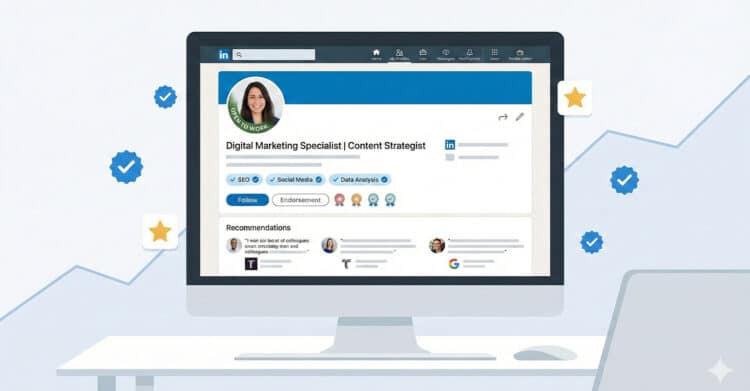
Your LinkedIn headline should include your current role, key skills, and the type of position you’re seeking. This short text appears in search results and determines whether recruiters click through to your full profile. LinkedIn gives you 220 characters to work with, so use them strategically.
Specific headlines outperform generic ones. Instead of just listing your job title, add what makes you valuable. For example, rather than “Marketing Manager,” try “Marketing Manager | B2B SaaS | Demand Generation.” Recruiters searching for those terms will find you more easily as a result.
How Do You Write a Professional Summary That Attracts Recruiters?
You write a professional summary that attracts recruiters by leading with your value proposition and including keywords they search for. Start by asking yourself: What problems do you solve? What results have you delivered? Write in the first person to create a personal connection with readers.
Include keywords naturally throughout your summary. Recruiters search for specific skills and experiences, so if you want to find a job using social media effectively, your profile must contain the terms they search for. End with a call to action that invites connections or conversations.
How Do You Build a Network That Leads to Job Opportunities?

You build a network that leads to job opportunities by making strategic connections and engaging consistently with your industry. According to Jobvite, referral hires have a 45% retention rate after two years, making them highly valuable to employers. With your profile optimized, your next step is building meaningful connections.
How Do You Send Connection Requests That Get Accepted?
You send connection requests by personalizing each message and explaining why you want to connect. Random connection requests rarely produce results. Instead, target people strategically: recruiters in your field, employees at target companies, and professionals whose careers you admire.
Mention shared interests, mutual connections, or specific content they posted. This effort shows genuine interest and dramatically increases acceptance rates. Once you’re connected, nurture the relationship before asking for anything in return.
Why Does Engaging With Content Help Your Job Search?
Engaging with content helps your job search by increasing your visibility to recruiters and hiring managers. LinkedIn’s algorithm rewards active users, showing their profiles more frequently in search results. According to LinkedIn Economic Graph data, professionals who post weekly receive 5 times more profile views.
Thoughtful comments on others’ posts build your visibility over time. Share perspectives that add to conversations, ask questions that demonstrate expertise, and offer helpful insights. Learning how to grow your social media presence the right way will accelerate your visibility and attract more opportunities.
Should You Follow Companies You Want to Work For?
Yes, you should follow companies you’d love to work for. Their updates provide insight into growth, culture, and priorities. This knowledge makes your applications and interviews stronger because you understand what matters to them.
Engage with their content thoughtfully by commenting on company news and achievements. This activity can catch attention from internal recruiters and hiring managers. It also demonstrates genuine interest beyond just wanting any job, which makes you a more attractive candidate.
What Content Should You Post During a Job Search?

During a job search, you should post content that demonstrates your expertise and industry knowledge. You don’t need to post daily or become an influencer. Simply sharing valuable insights consistently positions you above passive job seekers who never engage. According to LinkedIn, members who share content weekly receive significantly more recruiter outreach.
How Do You Share Industry Insights Effectively?
You share industry insights effectively by adding your perspective when you share articles, trends, and news. Simply reposting isn’t enough. Ask yourself: What does this development mean? How should professionals respond? This context shows that you think critically about your industry.
Curating content requires less effort than creating original posts, yet it still demonstrates awareness and engagement. Understanding the basics of social media marketing helps you approach this effort strategically and get better results.
How Do You Demonstrate Expertise on Social Media?
You demonstrate expertise on social media by sharing original content about your professional experiences. Share lessons from projects you’ve completed, discuss challenges you’ve solved, and offer tips that help others in your field. This content creates tangible evidence of your capabilities that recruiters can see.
Writing effective LinkedIn articles can establish you as a thought leader in your field. Even brief posts sharing professional observations build credibility over time. Recruiters and hiring managers value candidates who contribute to their professional communities.
How Do You Comment Strategically on LinkedIn?
You comment strategically on LinkedIn by adding substance to conversations rather than simply agreeing. When industry leaders post, your thoughtful response appears to their entire audience. This exposure introduces you to potential connections and opportunities you might otherwise miss.
Share your experiences, ask smart questions, or respectfully offer alternative viewpoints. These contributions make you memorable to the original poster and other readers alike. According to LinkedIn, engaging comments receive more visibility than passive likes.
Step-by-Step Process to Find a Job Using Social Media

Follow these steps to put everything you’ve learned into action. Each step builds on the previous one to create a comprehensive social media job search strategy.
Step 1: Audit Your Current Profiles
Search your name on Google and review what employers will find. Remove or hide anything unprofessional, including old photos, controversial posts, and outdated information. This matters because 70% of employers screen candidates on social media before making hiring decisions. A clean digital footprint prevents qualified candidates from being eliminated for reasons unrelated to their skills.
Step 2: Complete Your LinkedIn Profile
Add a professional headshot, write a compelling headline with keywords, craft a detailed summary, and fill in your complete work history. Include skills that recruiters search for in your industry. This matters because LinkedIn reports that complete profiles are 40 times more likely to receive opportunities. Recruiters can’t find you if your profile doesn’t contain the terms they’re searching for.
Step 3: Identify Target Companies
Create a list of 20 to 30 organizations where you’d want to work and follow them on all relevant platforms. Research their culture, recent news, and current job openings. This matters because targeted job searching outperforms mass applications. The following companies keep you informed about opportunities and give you conversation starters that demonstrate genuine interest during interviews.
Step 4: Build Strategic Connections
Connect with recruiters in your field, employees at target companies, and industry peers using personalized connection requests. Mention shared interests, mutual connections, or specific content they posted. This matters because referral candidates are 4 times more likely to be hired, according to Jobvite. Your network becomes your access point to the hidden job market, where most positions are filled.
Step 5: Engage Consistently
Spend 15 to 30 minutes daily commenting on and sharing relevant content. Add thoughtful perspectives rather than generic responses like “Great post!” This matters because LinkedIn’s algorithm rewards active users by showing their profiles more frequently in search results. Consistent engagement keeps you visible to recruiters and builds relationships that can lead to referrals.
Step 6: Create Original Content
Share at least one original post weekly that demonstrates your expertise. Write about lessons learned, industry trends, or professional observations. This matters because content creators stand out from passive job seekers. According to LinkedIn Economic Graph data, professionals who post weekly receive 5 times as many profile views as those who don’t.
Step 7: Monitor and Adjust
Track which activities generate the most engagement, profile views, and connection requests. Focus your efforts on what works and eliminate what doesn’t. This matters because effective job searching requires iteration. What works for one industry or role may not work for another. Regular analysis helps you invest your time where it produces the best results.
Key Questions
Can Social Media Help You Find a Job?
Yes, social media has become a primary channel for job searching and recruiting. According to Jobvite, over 90% of recruiters use LinkedIn to find candidates. Building a professional presence gives you access to the hidden job market, where 60 to 70% of positions are filled through networking before being publicly posted.
Which Social Media Platform Is Best for Job Searching?
LinkedIn is the most effective platform for job searching across nearly all industries. According to LinkedIn, 87% of recruiters use the platform. It combines job listings, recruiter search tools, and professional networking. Twitter serves tech and media professionals well, while Instagram works best for creative roles.
How Do You Optimize Your LinkedIn Profile for Recruiters?
Include industry keywords in your headline and summary that recruiters commonly search. Use a professional headshot since profiles with photos receive 21 times more views. Write a compelling first-person summary and complete all sections. Enable the Open to Work feature to signal availability.
What Is the Hidden Job Market?
The hidden job market refers to positions filled through networking and referrals rather than being publicly posted. According to LinkedIn, 60-70% of jobs fall into this category. Social media gives you access through connections and conversations with hiring managers before positions are announced.
How Often Should You Post on Social Media During a Job Search?
Consistency matters more than frequency. Engage daily with others’ content through meaningful comments. Post original content at least once weekly. According to LinkedIn Economic Graph data, professionals who post weekly receive 5 times as many profile views as those who don’t.
Is It Unprofessional to Use the Open to Work Badge on LinkedIn?
No, using the Open to Work badge is not unprofessional. LinkedIn offers a visible green frame or a private setting visible only to recruiters. The private option is ideal if you’re currently employed and want discretion. Many successful job seekers use the visible badge to maximize exposure.
How Do You Find Hiring Managers on LinkedIn?
Search for job titles like “Director of” or “Head of” combined with your target department and company name. Check job postings to see who posted them and review company pages for leadership. Use LinkedIn’s “People” filter to find employees at your target companies.
What Hashtags Help You Find Jobs on Twitter?
Effective job search hashtags include #hiring, #jobopening, #nowhiring, and #remotework. Industry-specific hashtags like #techjobs, #marketingjobs, or #designjobs help you find relevant positions. Follow these hashtags and check them daily to discover opportunities early.
Should You Connect With Recruiters Before Applying?
Yes, connecting with recruiters before applying can improve your chances. According to Jobvite, referral candidates are 4 times more likely to be hired. Send a personalized connection request mentioning your interest in the company. This relationship helps your application stand out.
How Do You Ask for a Referral on LinkedIn?
First, build a genuine connection through engagement. Then send a direct message explaining your interest in their company and a specific role. Share why you’re qualified and ask if they’d be comfortable referring you. Make it easy by providing your resume and the job link.
Final Thoughts
Using social media to find a job requires strategy, not just time spent scrolling. The platforms reward authentic engagement and consistent presence. Your next opportunity might come from a comment you leave today or a connection you make this week.
Start with one platform and master it before expanding to others. LinkedIn deserves your primary focus regardless of your industry. Once your profile is optimized and you’re engaging regularly, you can add other platforms that serve your specific field.
The candidates who succeed at social job searching treat it as relationship building, not broadcasting. They add value before asking for anything. They show up consistently, even when they don’t need a job immediately. This foundation makes job searching much easier when the time comes.
Your action this week: complete or refresh your LinkedIn profile using the guidance above. Then identify five people worth connecting with and send personalized requests. Small, consistent actions add up to real opportunities. Explore digital marketing careers to see where your social skills might take you.
Frequently Asked Questions
How Long Does It Take to Find a Job Through Social Media?
Results vary based on your industry, experience level, and effort. Building a strong presence takes weeks, but opportunities can emerge quickly once you’re visible. Consistent activity over two to three months typically generates meaningful leads.
Should You Use Personal Social Accounts for Job Searching?
It depends on your content. Review your posts for anything unprofessional and adjust privacy settings as needed. Many professionals maintain separate accounts, keeping personal content private while using public accounts for career-related activity.
Do Recruiters Really Check Social Media Profiles?
Yes. According to CareerBuilder, 70% of employers screen candidates on social media. They verify experience claims, assess cultural fit, and look for red flags. A professional, active presence strengthens your candidacy.
What Should You Never Post When Job Searching?
Avoid complaints about current or past employers, controversial political content, and anything unprofessional. Don’t post desperation or frustration about your job search. Stay positive and focus on demonstrating value instead.
Is LinkedIn Premium Worth It for Job Seekers?
Premium offers benefits such as InMail messages, the ability to see who viewed your profile, and applicant insights. It can accelerate your search, but isn’t required. A well-optimized free profile with strong engagement often outperforms a passive Premium account.
How Do You Reach Out to Recruiters Without Being Pushy?
Engage with their content first before sending connection requests. When you reach out, be specific about your background and what you’re looking for. Offer value by sharing relevant insights. Follow up once if needed, then move on.
What If You Don’t Have Time to Post Content Regularly?
Focus on engaging with others’ content instead. Thoughtful comments on industry posts build visibility without requiring content creation time. Even 15 minutes daily of strategic commenting can produce meaningful results.
Can You Find Remote Jobs Through Social Media?
Absolutely. Many remote-first companies post opportunities on social platforms. Hashtags like #remotework and #remotejobs on Twitter help you discover positions. LinkedIn filters let you search specifically for remote opportunities as well.
Common Mistakes to Avoid
Leaving Your Profile Incomplete
Incomplete profiles signal low effort to recruiters. According to LinkedIn, complete profiles are 40 times more likely to receive opportunities. Fill out every relevant section, especially your summary, experience, and skills. Recruiters skip past incomplete profiles.
Sending Generic Connection Requests
The default “I’d like to add you to my network” message rarely works. Always personalize your requests by explaining why you want to connect. Mention shared interests or specific content they posted.
Only Engaging When You Need a Job
Dormant accounts that suddenly become active look desperate. Build your presence before you need it through consistent engagement over time. Regular activity creates a foundation that supports you when opportunities arise.
Broadcasting Without Engaging With Others
Posting content but never commenting on others’ posts limits your reach. Social media rewards two-way interaction, not one-way broadcasting. Spend as much time engaging with others as you do creating your own posts.
Applying Without Finding Internal Connections
Submitting applications through job boards without finding internal connections reduces your chances. According to Jobvite, referral candidates are 4 times more likely to be hired. Use social media to find people who can refer you.
Maintaining an Inconsistent Professional Image
Different profiles, photos, and conflicting information confuse recruiters. Maintain consistency across all platforms for a unified professional image. Use the same headshot and ensure your experience details match across all platforms.